
Developer: Nintendo | Publisher: Nintendo
Before F-Zero went into a long, drawn out hibernation, the series enjoyed a number of titles between the SNES, Nintendo 64 and surprisingly the Game Boy Advance. Going back to the 2D format after the release of F-Zero X on the Nintendo 64 was a brave move by Nintendo, but was well suited for the Game Boy Advance form factor.
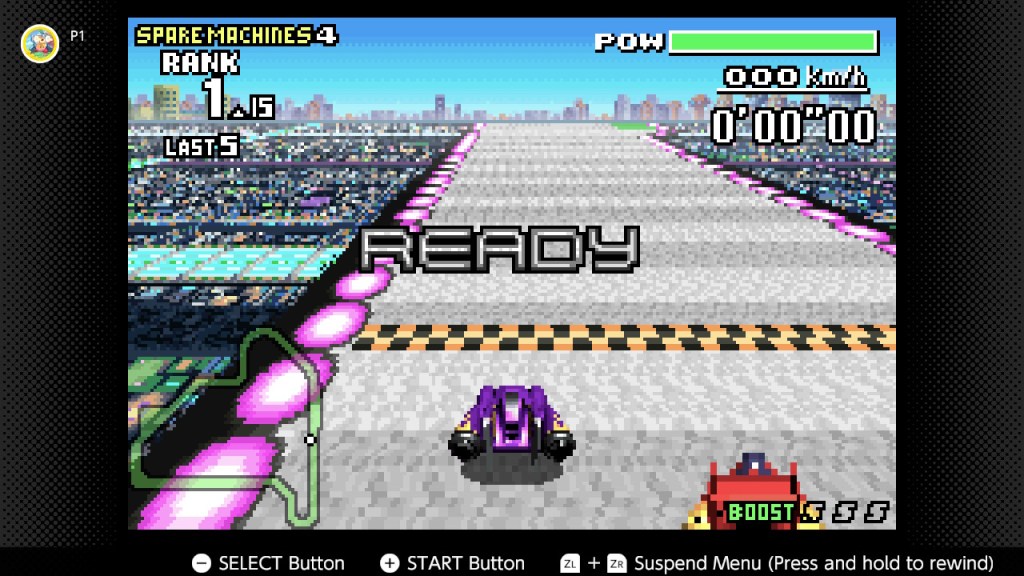
As I tend to do with every racing game, I began F-Zero: Maximum Velocity with the mind of mastering the Beginner difficulty, expecting to dominate the races given my recent experience with F-Zero on the SNES. I was sorely mistaken, and found myself eating the dust of not only my rivals, but the generic racers found at the back end of the race. I felt lost in the abyss of inadequacy. Then I remembered an important lesson from my SNES experiences on Nintendo Switch Online. Google the manual.
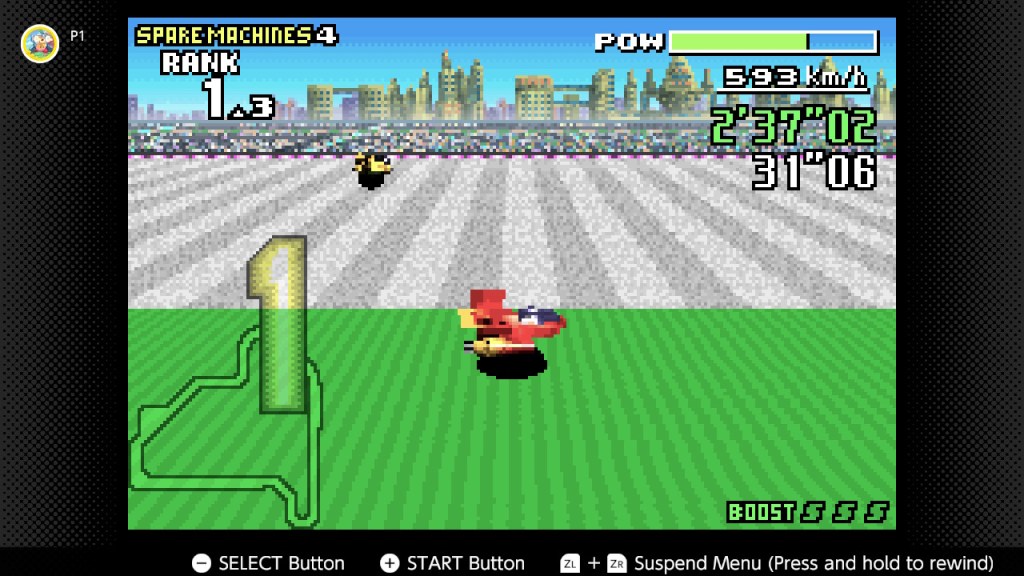
My fortune soon turned around when I learned of a new mechanic in F-Zero: Maximum Velocity, and that was the “Blast Turn”. By tapping the “A” button rapidly as you turn corners, you activate the Blast Turn, which significantly improves your vehicles movement around corners and is vital to not only winning the races in this game, but critical to actually being able to play at all. At first I questioned why they felt the need to introduce a mechanic like this. It felt needless to remove my hand from the button for acceleration and rapidly tap it just to make corners, until eventually it clicked. I was swerving turns and speeding around corners quicker than I ever felt like I had in an F-Zero title. I was competing in higher tiers of difficulty and standing a good chance at beating the competition in heart-stopping moments. The gameplay felt majorly enhanced and much more engaging thanks to this mechanic and my opinion of this game began to turn for the better.
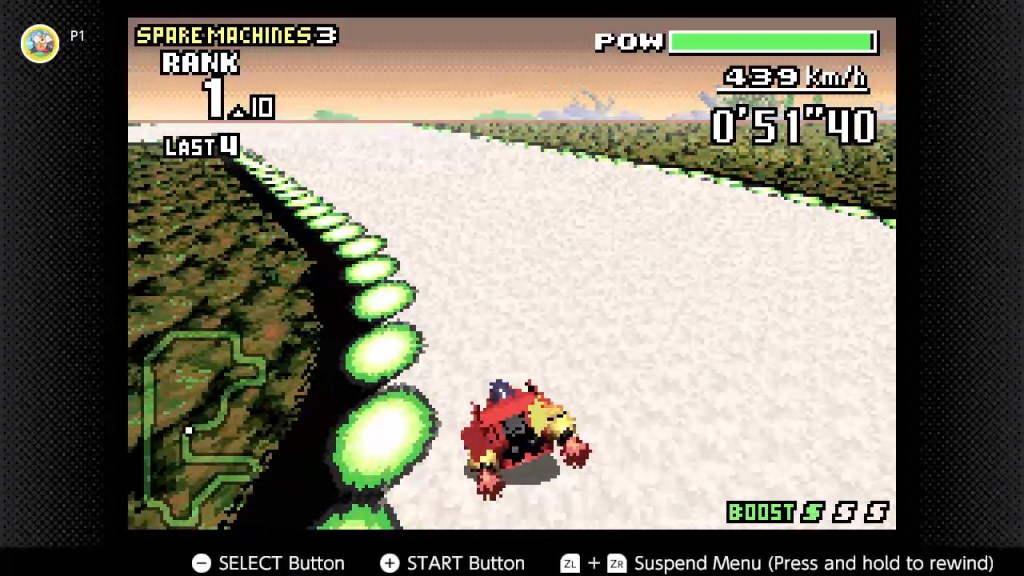
The original format from the SNES release makes a triumphant returns. Vehicles have a “Power” gauge representing a health bar, which depletes when hit by enemies, barriers or stage hazards. Boost is available only after the first lap, and remains to feel fast even on a 2D platform. In the menu screen, you can change how many “lives” you have for if you fail to place in a race, or destroy your vehicle by depleting its power completely. Generously, players can have up to five.
The course design itself is vastly improved this time around. There are still some tight corners and tracks where failing a jump will make you immediately fail, but it feels a lot fairer and achievable now. Corners are much easier thanks to the earlier mentioned Blast Turn, and generally it doesn’t feel like the game is actively trying to make you fail. The game feels like its testing your abilities and teasing the best out of you. I do wish there was a bit more variety with the local environment, colouring and general themes of the tracks, but for a Game Boy Advance title, it might be creeping into the field of asking a bit too much.
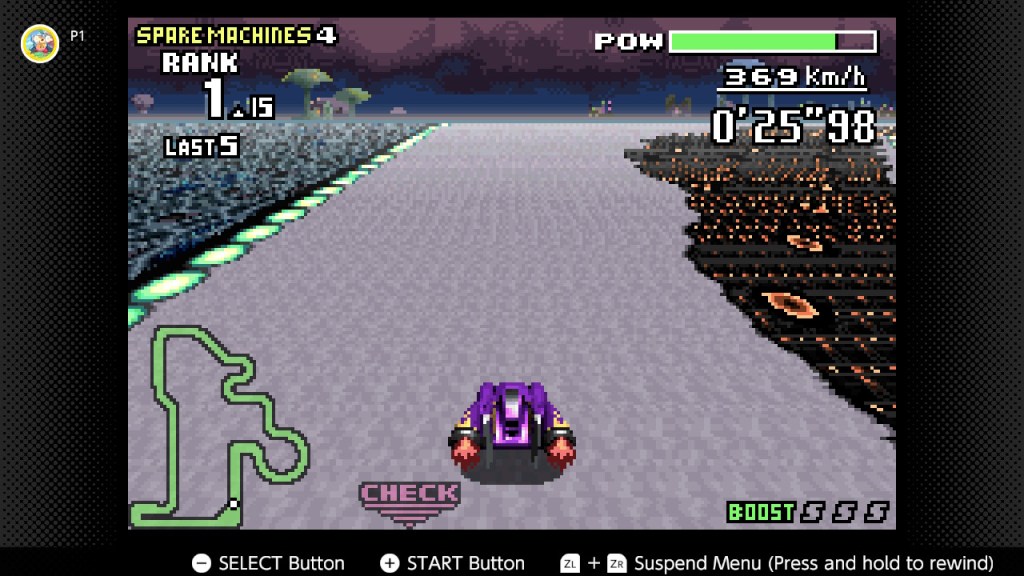
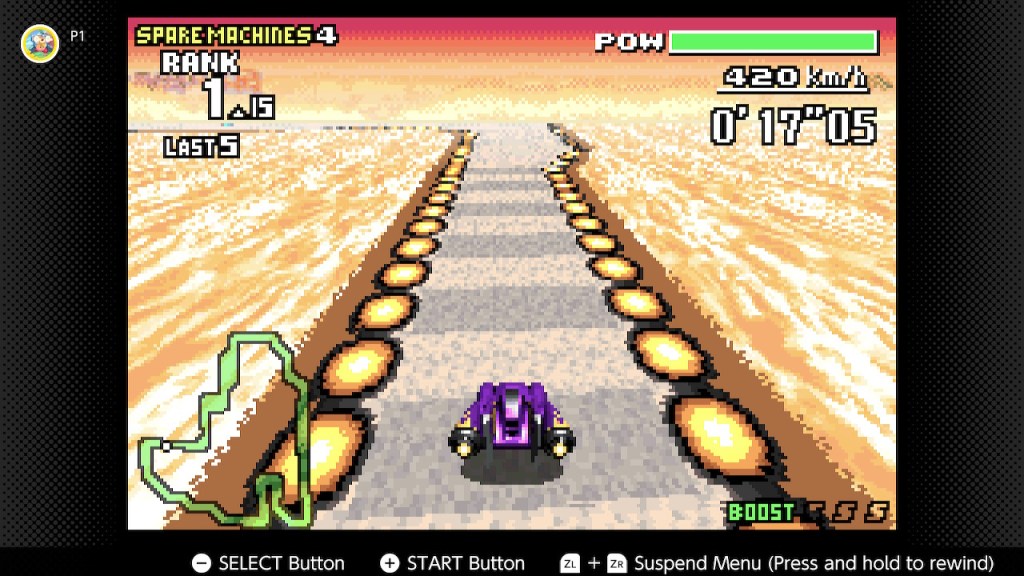
F-Zero: Maximum Velocity starts with four vehicles available, with an additional six that players can unlock. The easiest comes from beating all of the cups on the standard difficulty and the others from beating harder modes with a good sense of reward for all of your hard work. This isn’t for the faint hearted and challenges the player to the extreme – perhaps a bit much for some, and this is a game that is yet a product of its time by trying to keep the player’s attention for as long as it can with some inflated challenges. Still, it’s good bragging rights if you can unlock them all.
Overall, this is a great incremental improvement from the SNES version. My appreciation of the series has blossomed from this game, and I once again walked away with a huge smile on my face, excited to see what awaits me in my quest to play all of the F-Zero games available on Nintendo Switch. It doesn’t quite hit the same marks of its 3D cousin on the Nintendo 64 – but as a 2D F-Zero, its simply incredible.
9 out of 10
reviewed on Nintendo switch


 Everyone's Arcade
Leave a comment