
Developer: Nintendo | Publisher: Nintendo
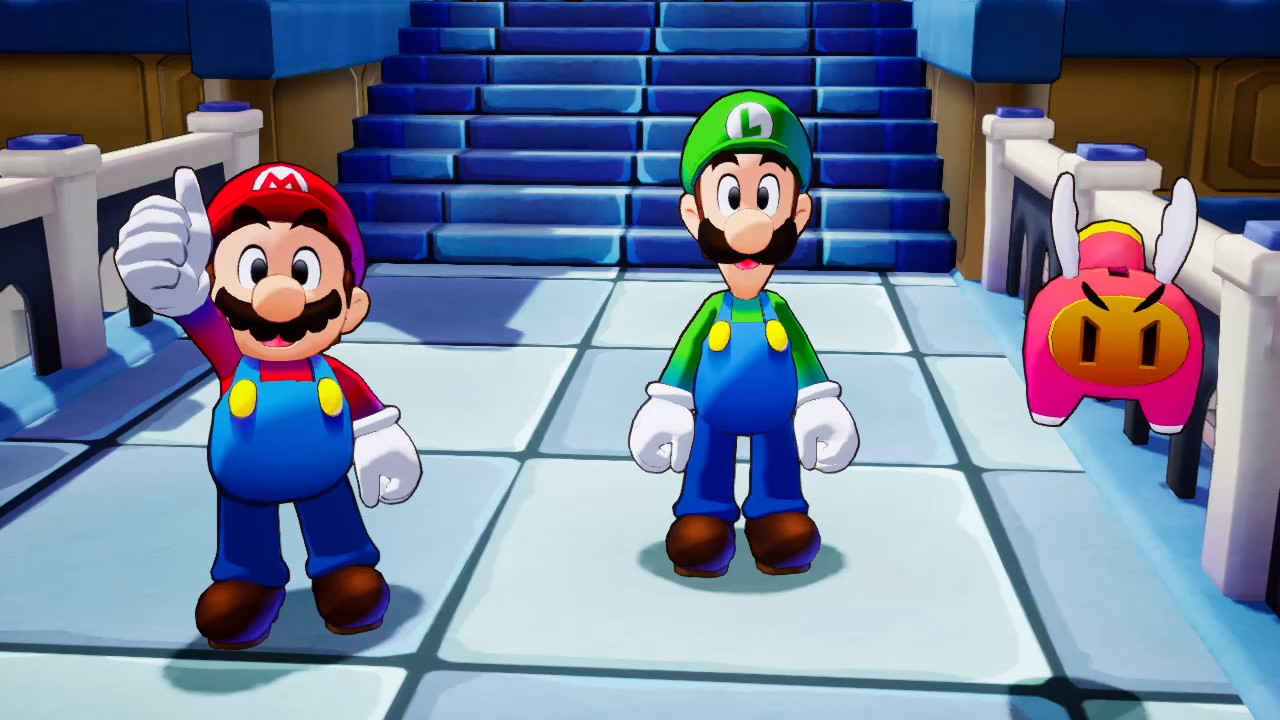
The Mario & Luigi series had been long presumed never to return by its loyal fanbase. The original development team had been disbanded, and the most recent original entry was 2015. Two remakes were released on the Nintendo 3DS in 2017 and 2018, but otherwise the series appeared to be dead in the water, until a fateful Nintendo Direct last year. Mario & Luigi: Brothership was announced for the Nintendo Switch with many fans delighted at the announcement, but some apprehensive about the series return. Could it return to its former glory?
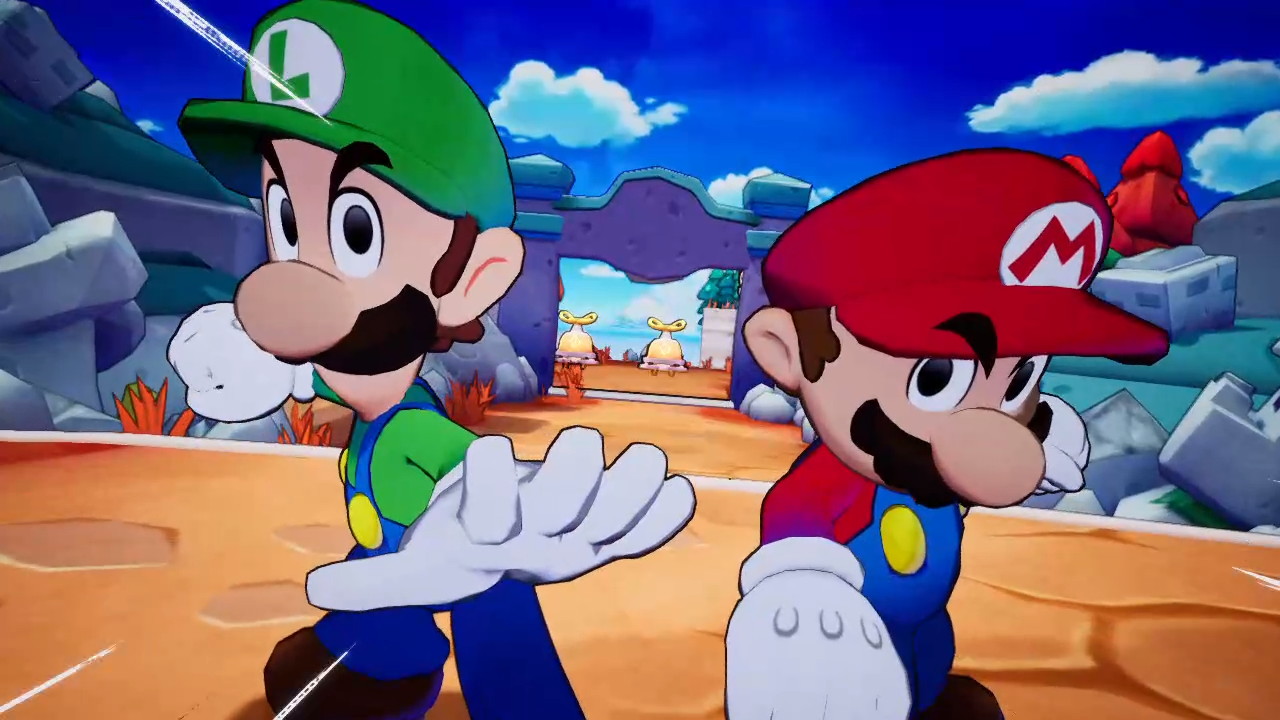
The opening hours of Mario & Luigi filled me with dread and doubts about what was to come. I found myself going through the motions as I took on the early enemies and waded through the text-heavy tutorials and hand-holding, but thankfully, once the training wheels came off, my opinion of the game took a turn.
The narrative opens with the devastating event of a continent known as Concordia being ripped apart. Mario & Luigi appear to be suddenly transported to this mysterious new world and find themselves on a floating island, resembling a ship, aptly known as Shipshape Island. The Mario brothers meet a young survivor of the terrifying rift Concordia has suffered, and pledge to help her rebuild the continent and return Concordia to its former glory, re-uniting its inhabitants to one land once more.
The narrative itself isn’t ground-breaking (forgive the pun), but it does offer hilarious dialogue and somewhat shocking moments that fans of the Mario & Luigi series have come to love. While the writing isn’t quite as good as its predecessors, it does a good job of capturing the tone. One thing I love about the Mario & Luigi series is how it delves into the lore and personalities of those within the Mushroom Kingdom, that we as fans don’t often see in the main entries in the series, and Brothership does a good job of delivering on this front.
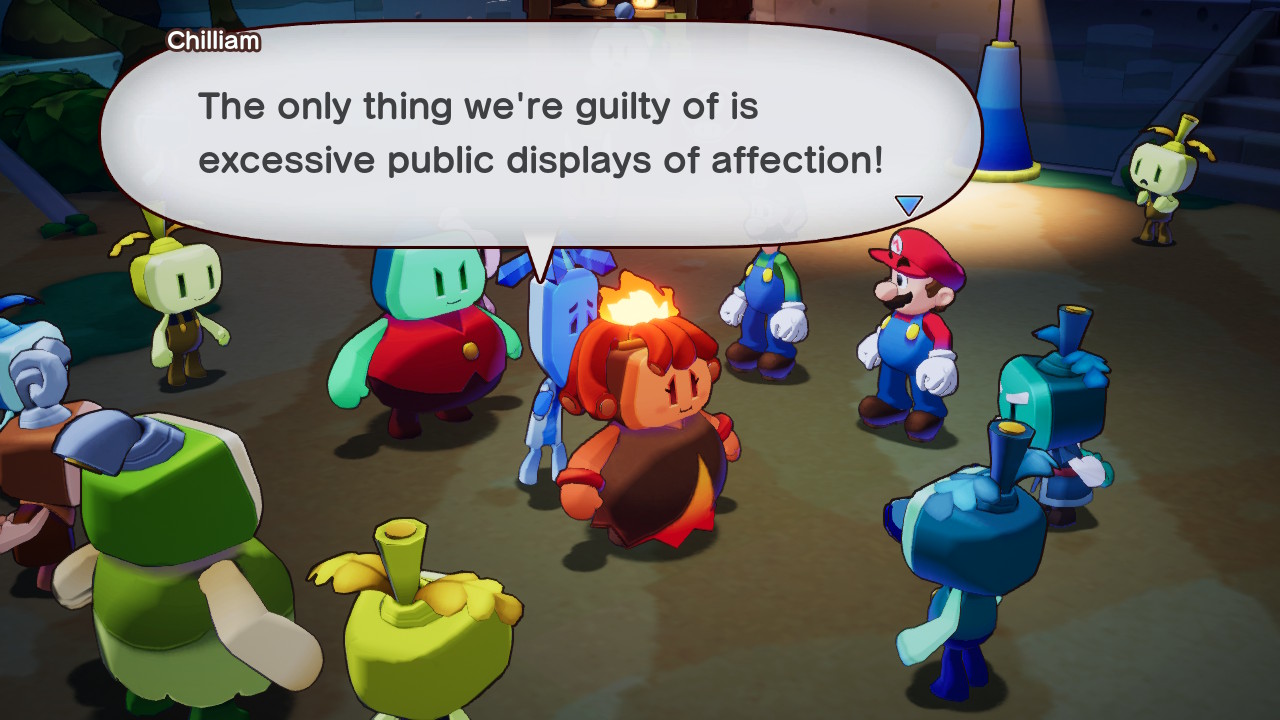
The gameplay consists of a satisfying loop whereby you navigate the ocean currents on Shipshape Island to locate the land that has split from the once-complete Concordia. As Mario & Luigi reach each island, there’s often trouble from common enemies, disputes with the islanders or various problems caused by the split of the land. Playing as Mario & Luigi, you have to explore each island, solve its puzzles and beat its enemies to reach a lighthouse. Once reached, the lighthouse is connected to Shipshape Island and the continent begins its rejuvenation.
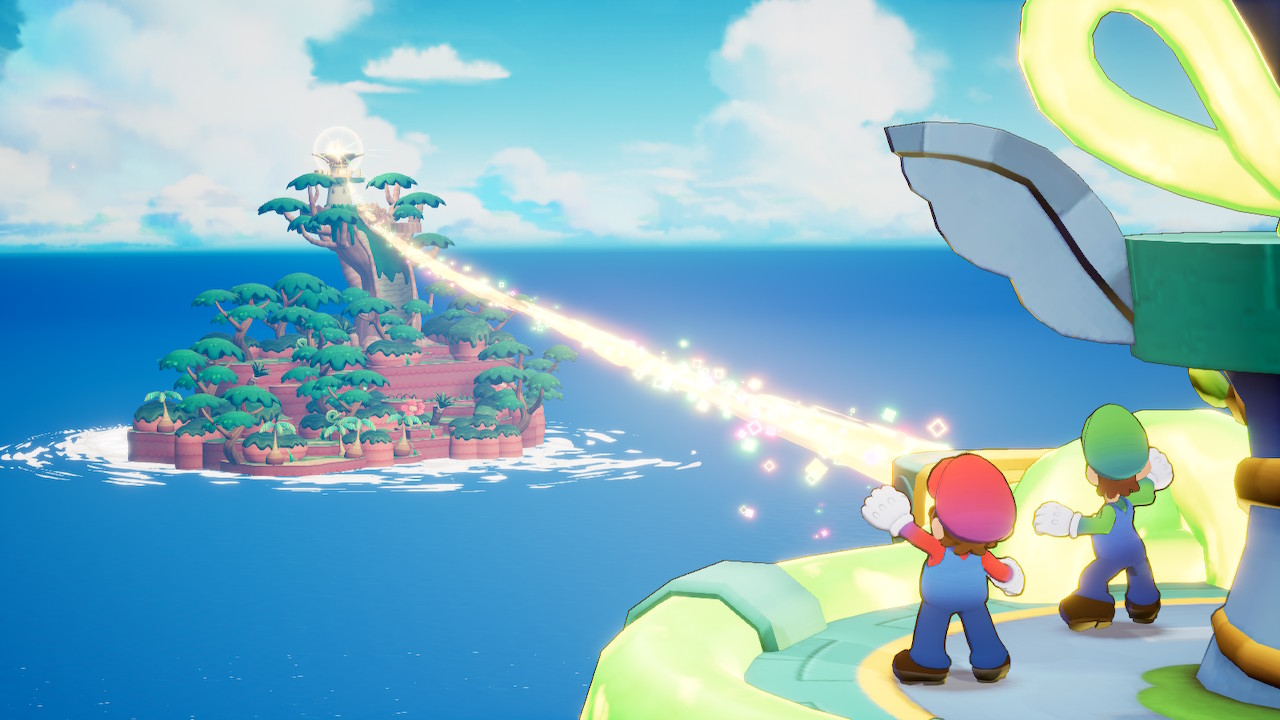
Exploration of the islands generally consists of puzzle-solving, light platforming activities and of course, turn-based battle routines. While the puzzles aren’t as intricate as the likes of The Legend of Zelda, they do offer just enough to feel entertaining and satisfying upon completion. Any more, and they might dominate more of the game than would feel necessary to the overall tone and adventure on the table. The puzzles consist of challenges such as splitting the brothers up, with Mario exploring a small area while Luigi hits a button to change the environment and allow Mario to reach new areas that were previously inaccessible, sometimes with a time limit.
The turn-based combat will be familiar to fans of the Mario & Luigi series. The brothers take turns in attacking enemies, with the ability to jump, hit with a hammer or use their special Bros Attack moves to unleash huge damage and turn the tide in battles. While early battles are relatively easy, even the common enemies can become challenging later on. During battles, you have the opportunity to dodge and counter enemy’s moves, but as you encounter new enemies, you need to learn their rhythm and routines in order to avoid their attacks. Not a lot changes fundamentally in battles throughout the game, but new enemies and moves are introduced carefully throughout to keep the audience captivated.
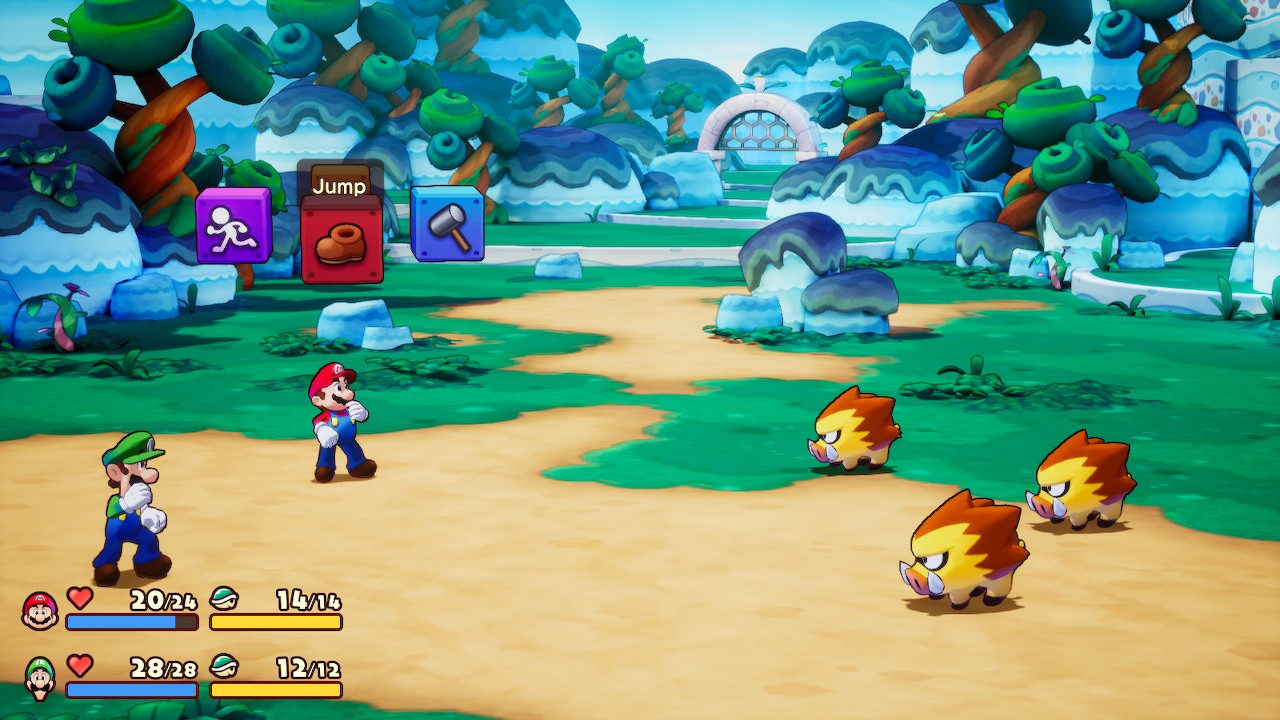
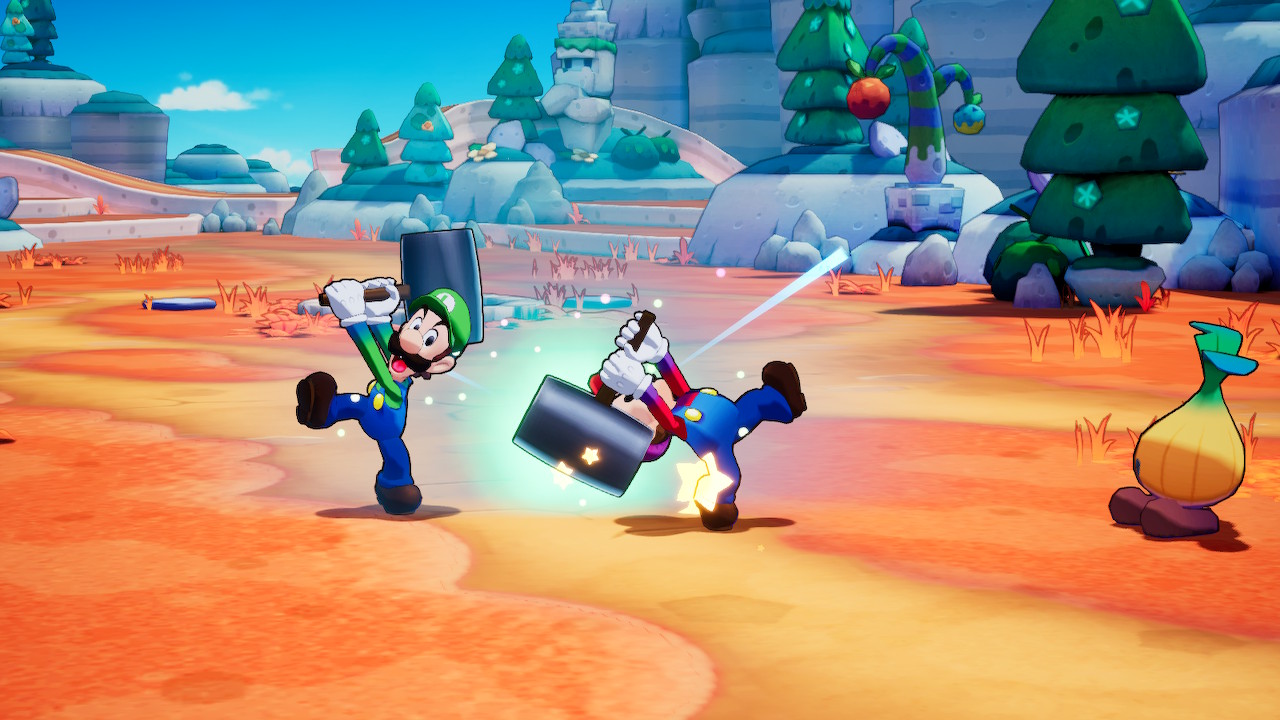
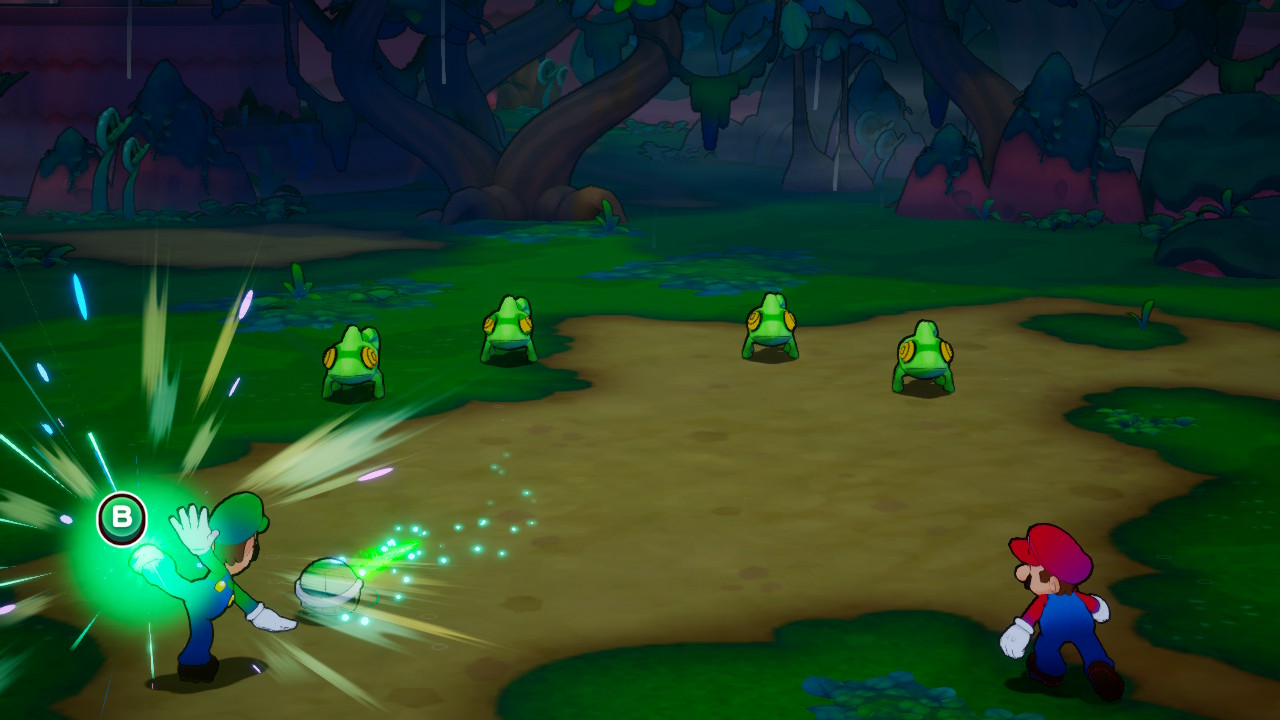
The most significant change introduced in Brothership’s battle system is the Battle Plug system. After having time to learn the basics of combat, this is introduced as a way to customise battles but also force you to change things up every now and then. Battle plugs enhance combat, defence and sometimes afford the Mario Bros the opportunity to use items without taking up a turn. You are limited at the start to using only two at a time, and they lose their charge after a certain amount of turns, with a recharge period required before you can set it again. For example, the Damage Shield reduces the damage received from enemies by 20%, but only has a charge of 10. After 10 uses, it requires a thirty-turn recharge period. During this time, you can attach other Battle Plugs and explore different combinations and ways to enhance your experience with the game. At first, I was concerned that some of the Battle Plugs were going to trivialise common battles and make the combat too easy, but they become more of a necessity as you proceed through the game, especially in the later hours of gameplay.
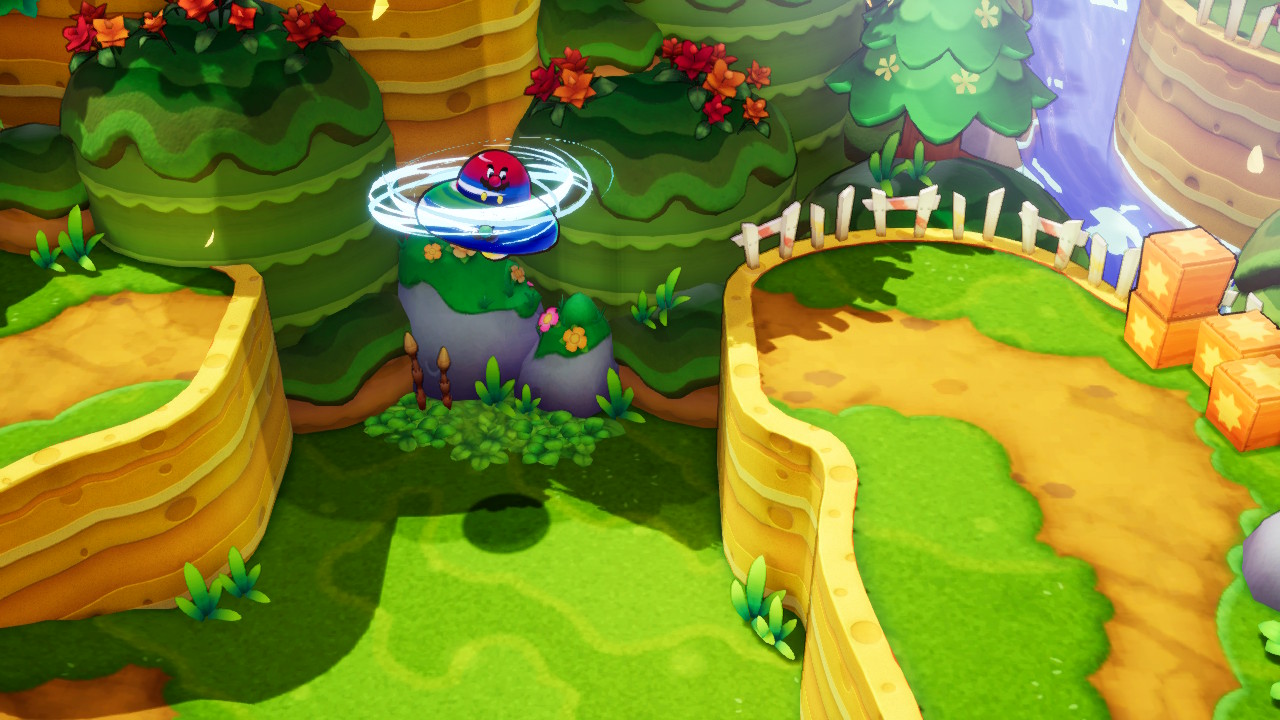
Battles and puzzles aside, islands require a degree of platforming from the brothers, keeping in touch with Mario’s origins. These range from well-timed jumps, to quick-time actions and the utilisation of ‘Bros. Moves”, such as the “UFO”. There are three Bros. Moves in total, but for the sake of avoiding spoilers, I’ll only talk about the UFO move in this review. Mario & Luigi adopt a tango-like position before spinning and transforming into a UFO. For a small amount of time, you can use this form to fly across small gaps and make precise landings on smaller platforms or ledges that were far away. These moves are also further utilised in some puzzle-solving throughout the game and keep the overall experience from feeling stale as you make your way through the campaign.
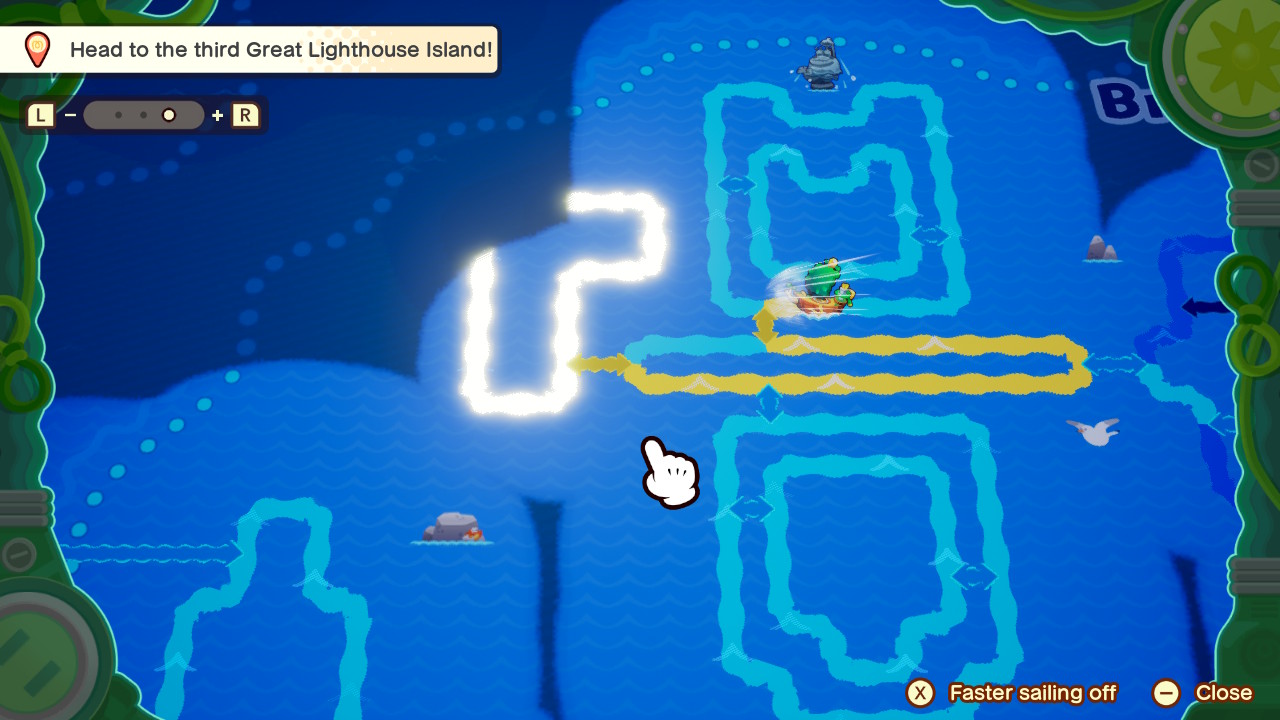
One of the few negatives I have to say about Mario & Luigi: Brothership is the way exploration is handled with the world map. Traversing islands themselves is fun, but actually finding them with Shipshape Island is a bit of a chore. To sail the oceans, you are presented with a map that contains multiple currents. If you want to travel to a section of this map, you select a current and have to wait for Shipshape Island to catch up to that point. Eventually, you obtain the ability to speed up the ship, but going long distances requires waiting around. You can make use of that time by revisiting older islands or that are now attached to Shipshape Island or completing side quests, however I usually just wanted to make my way to the next step of my journey. A proper implemented fast-travel system would be welcomed for those parts of the adventure, or a bit more agency afforded to the player in reaching these sections instead of waiting for the currents to take me there would be welcomed.
Another small complaint I had with Mario & Luigi: Brothership is the occasional performance dip. Throughout most of the game, it’s stable. Some islands or areas where a little bit more is going on, whether its more character models or environmental effects, have larger drops or stutters which can be distracting at times. Fortunately in my playthrough, I didn’t see any major dips during battles, as this could be catastrophic when relying on precision inputs for avoiding or countering enemy moves.
As I reached the end of Mario & Luigi: Brothership, some aspects did begin to drag, or it felt like the game has some padding just to make it a bit longer. I wasn’t overly frustrated because I was still having fun with everything the game had to offer at this point, but it did feel like an unnecessary way to eke out more hours of playing time. I also found myself less inclined to complete the side quests on offer as they felt more and more like padding as I reached the end, especially as the rewards often didn’t feel all that beneficial.
Mario & Luigi: Brothership is an exceptional game, with a gorgeous art-style that compliments it generously and keeps it feeling grounded within its roots from the Game Boy Advance era. Despite a mind-numbing opening and a slightly stretched out end-game, the overall experience of this game is one I would whole-heartedly recommend to fans of RPGs and the world of Mario. Mario & Luigi isn’t as in-depth as Final Fantasy or Dragon Quest, but it’s certainly comfortable in its own lane of RPGs and delivers a fantastic game with just a few flaws.
8 out of 10
Review code provided by Publisher | Tested on nintendo switch
 Everyone's Arcade
Leave a comment