
Developer – Nintendo | Publisher – Nintendo
Pikmin is what I consider should be one of Nintendo’s flagship series. It has all of the quirks and the entertainment factor, with unique and cute characters who stand out among the crowd. Unfortunately, Pikmin doesn’t quite stand shoulder-to-shoulder with the likes of Mario, Zelda and Metroid, as far as franchises go. But it deserves to. Pikmin 4 came out over a decade since its previous iteration. Is it strong enough to hold up the expectations of the series to date, or does it simply wallow in the shadows?
First and foremost, those that are concerned about beginning with the fourth entry in a series – have no fear. Pikmin 4 rewrites the history of the series in a lot of ways, taking place in an alternate timeline to the original title. Any backstory required for that narrative is clearly explained and the goal is obvious from the outset. It’s of little importance anyway, Pikmin doesn’t focus on a strong narrative, it revolves solely around gameplay and the fun that can be had while practising Dandori – the art of managing your tasks strategically to attain maximum efficiency.
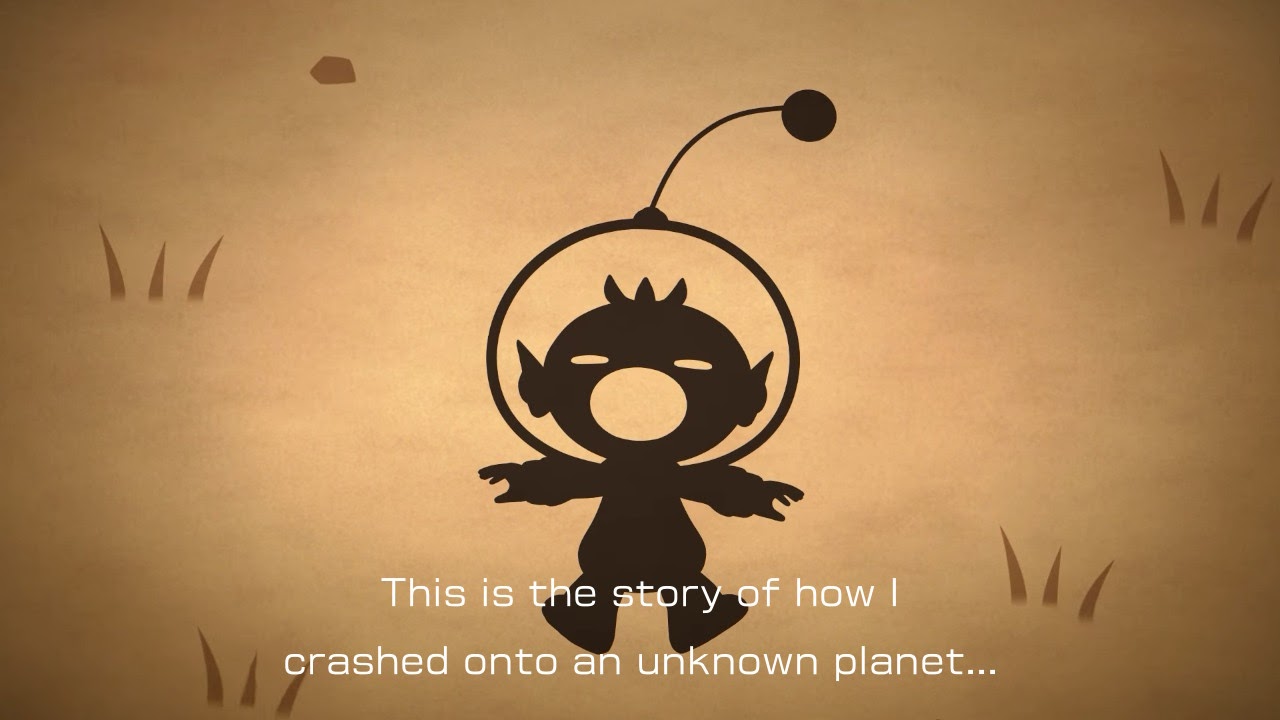
Pikmin 4 opens with a distress signal from Captain Olimar, the protagonist of Pikmin 1 and 2. He crash landed on the planet PNF-404 and was unsuccessful in his operations to escape, which diverted from the “good” ending of Pikmin 1. Instead, he is trapped here and the Rescue Corps are desperately responding to his signal. Yet they have a problem, they crash landed too. A rookie becomes the only option to try and retrieve the rescue corps and Olimar. For the first time in the series, you can name your own character and customise their looks in a simple yet fun character creator. Nobody in this series really looks human, with proportions you’d only ever see in a Hannah Barbera cartoon. Once you create your wacky-looking character, you are on your way to set out on a giant rescue mission!
The opening hour or so of Pikmin 4 holds your hand to the point of frustration. It feels like there is an encylopedia’s worth reading to do while the game pauses every few moments to walk you through the basic tutorial step-by-step. Thankfully, once this is over, the world is your oyster and you can begin exploring and growing your humble army of Pikmin. To start with, you are introduced to a back-garden looking area which has a number of treasures, tunnels and of course insect-like creatures that will try and stop you in your path. The simple goal is to collect treasure, which contains a chemical which can be used as fuel, known as Sparklium. Collect enough Sparklium, you unlock a new area to explore, but that’s not all there is to Pikmin 4, although that is your main goal.
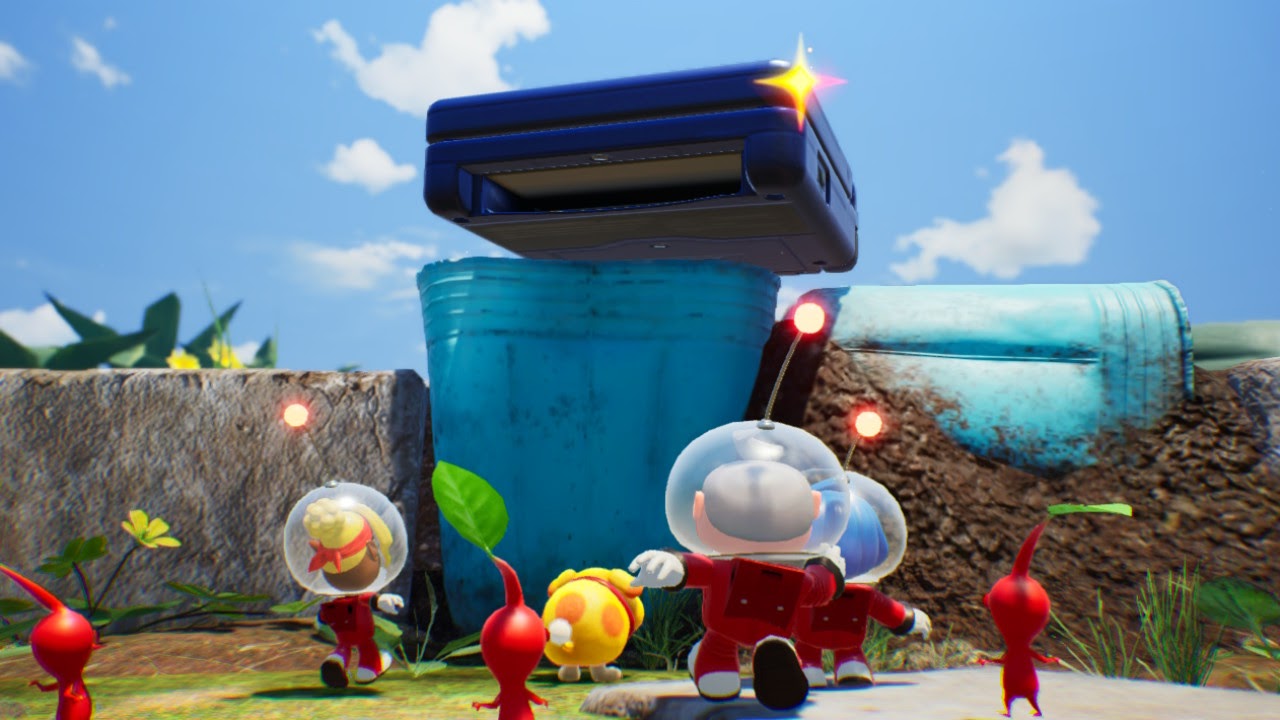
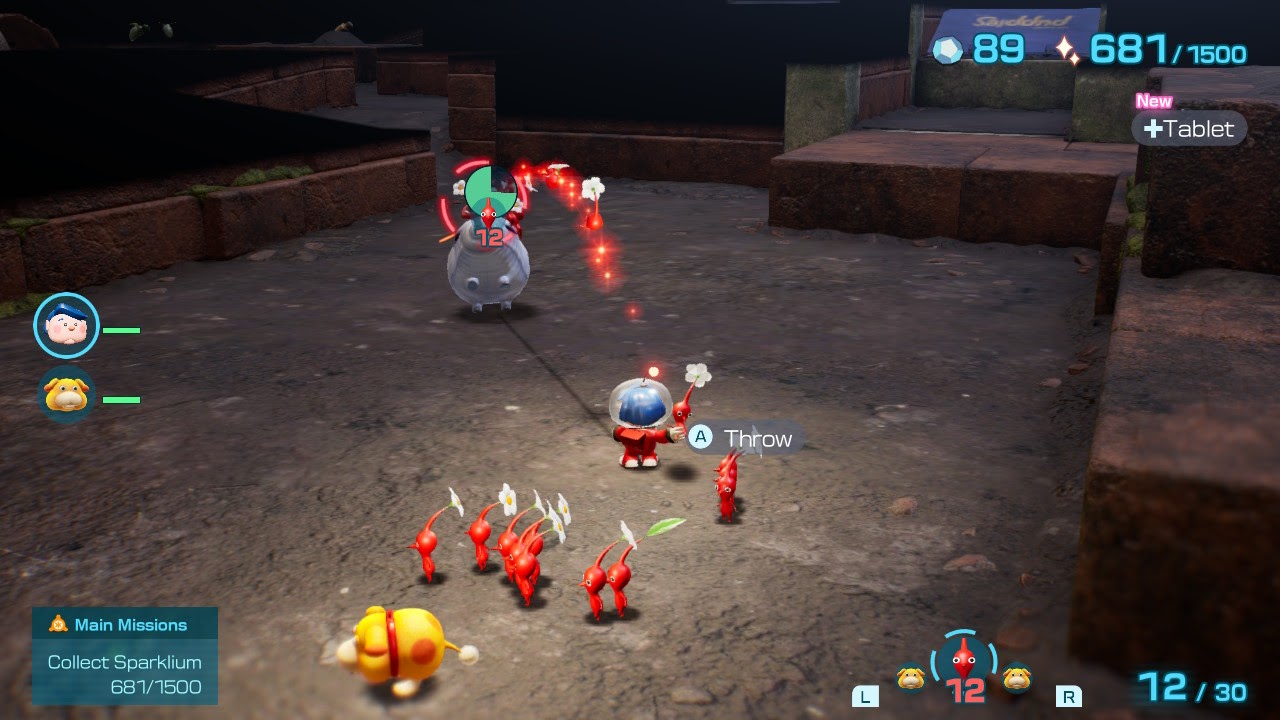
Exploring areas and killing insects are what grant you the ability to grow your army. Once an enemy is defeated by throwing Pikmin at them, they will carry the corpse back to their base and generate more Pikmin seeds. In an interesting change to the formula, Pikmin 4 only allows you to venture with twenty Pikmin at a time to begin with. Previous iterations allowed you to explore with one-hundred Pikmin as soon as you had sprouted as many seeds. Your army’s capacity is increased by finding “Flarlic” in the wild, a type of onion that is absorbed by the Pikmin’s own onion, increasing the on-field capacity, slowly but surely. Although a jarring change at first, I found the smaller capacity in early-mid game a welcome challenge, and an exciting discovery every time I came across Flarlic.
While exploring areas, you can also come across different types of tunnels that lead to underground areas. In these areas, the Pikmin you take with you are all you have at your disposal, inviting a level of challenge. If you encounter an enemy that wipes out half of your army, you cannot replenish them. You are forced to either continue with a diminished army, or take advantage of the new “Rewind” feature, that lets you turn back the clock at fixed intervals. Initially, I was concerned this would make the game too easy and possibly feel like cheating. Oh, how wrong I was. Although it’s a convenience not offered by previous iterations, it saves you needlessly returning to dungeons time and time again when a small mistake has led to a decimation of your Pikmin squad. Rewinding time isn’t necessarily free of consequence, you of course lose any progress made during that time. You may have to defeat difficult enemies once again, or traverse and find that treasure you just collected. For what felt like it could provide a huge disparity of balance to the games, I was pleasantly surprised at how useful it was and didn’t hamper my enjoyment. It’s of course, entirely optional too. You can avoid use of this function if you want to have a harder time.
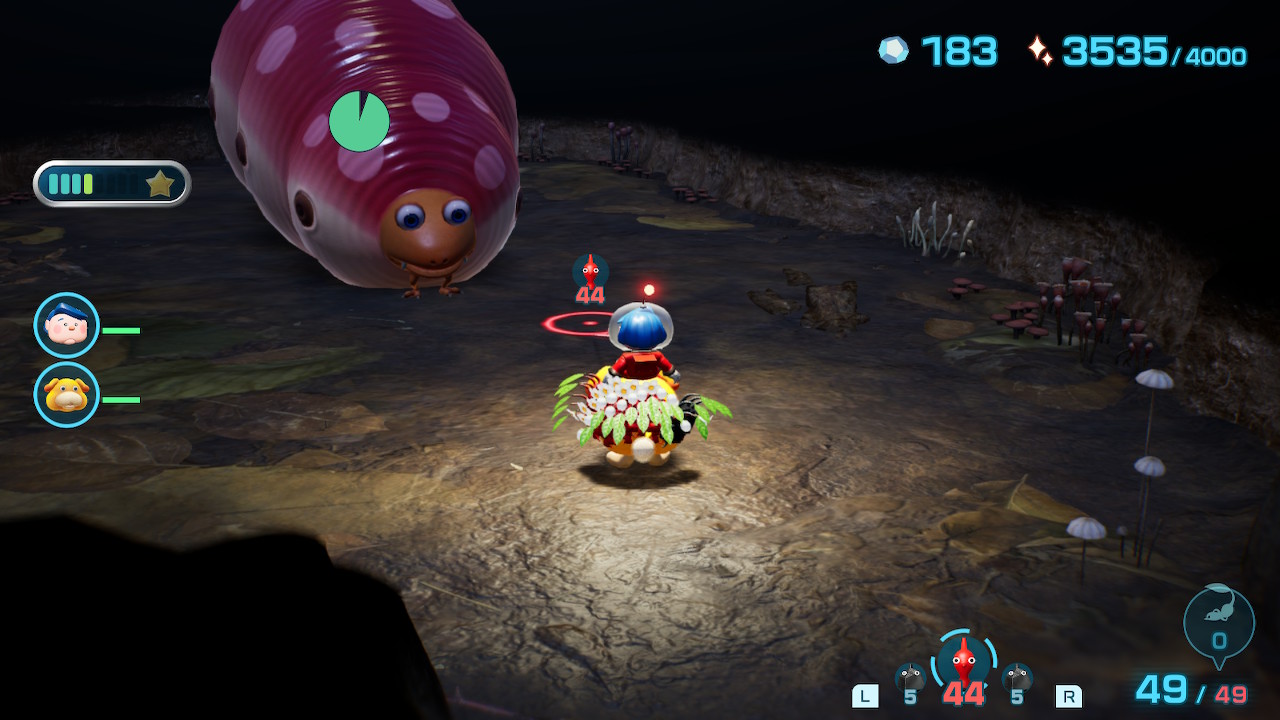
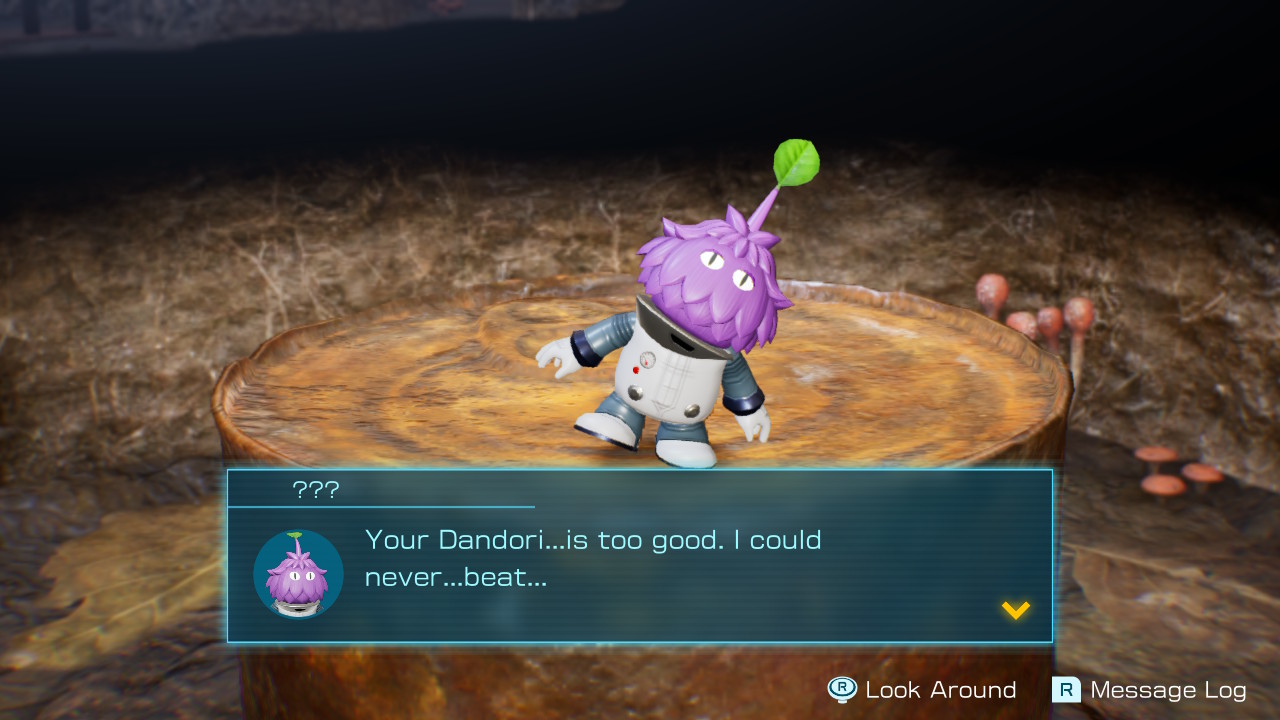
Some underground areas are also led by “Leaflings”. Beings that have travelled to PNF-404 but have nearly met a terrible fate. Their skin is replaced by leaves, but with the trade-off that they are able to breathe the air of the planet… and a strange fixation with Dandori. They challenge you to do better than they could in a set environment, with a time limit and a set selection of Pikmin at your disposal. This is one area where Pikmin 4 exceeded my expectations. A race against time, desperately trying to find the most efficient way to collect as many treasures as possible with a small and specific range of Pikmin at my disposal. Previously this might have been relegated to a side-mode, but I am pleased I was essentially forced to play these missions as part of the main game. Each has a rank of Bronze, Silver, Gold and Platinum. Bronze is all that is required to pass the test and rescue the Leafling, but you unlock the ability to replay these at any stage, for those wanting to flex their Dandori brains and obtain the coveted platinum medal on a true 100% run.
Back to the main areas of exploration and Pikmin 4 has once again introduced more mechanics that made me love the series even more. As you traverse the land you will discover raw material which can be converted to clay. You can send any amount of Pikmin to mine this material, and they will run to and from your base to collect it and carry on mining. Meanwhile, you can carry on exploring the world, where you might find an incomplete bridge that requires clay to be finished. Conveniently, that material you have just gathered is the trick to completing the bridge! Once again, you can send your Pikmin to collect the material from your base to build that bridge. The Pikmin themselves are much more autonomous in this sense than ever before, providing you the ability to set off and find more treasure while your Pikmin completes tasks for you. This kind of autonomous work has been teased prior in the Pikmin series, but it’s never quite been as good as this.
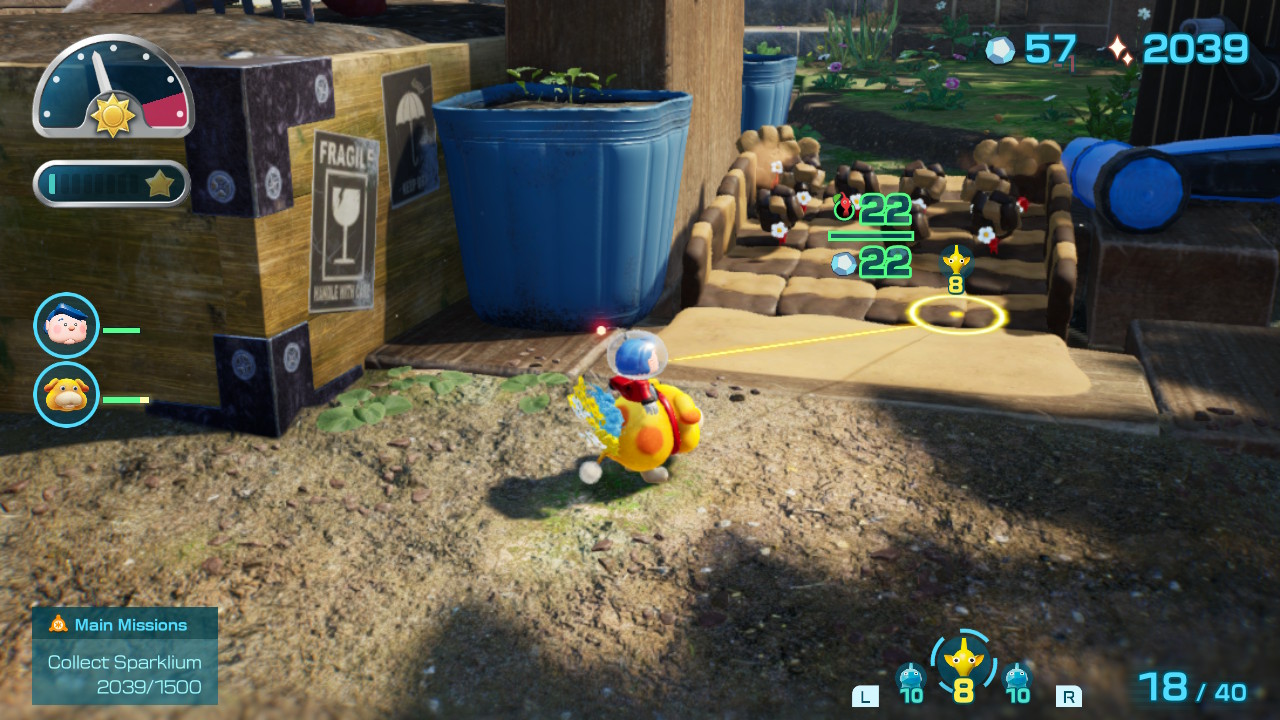
As a series first, you can explore the planet at night. You’re not exploring the planet as you would in a day, instead you’re defending a Lumiknoll – a luminous ant-hill-like structure in the ground, with the newly added Glow Pikmin. Within the span of the night, you must protect this structure at all costs, either by defeating every enemy on the map, or by simply holding them off from destroying the Lumiknoll by the time morning rolls around. The Glow Pikmin are special in that they are made by light and are the only kind who will dare venture in the dark, the time when all of the creatures become even more violent and rabid than they are in the daytime. You need to employ different tactics in this defensive mode, and it’s a great change of pace from the main game. Once you complete a mission, you are rewarded with medication for the aforementioned Leaflings that have been rescued, and you can cure them to return them to their human-looking identities.
The controls in Pikmin have always been relatively simple, and they have evolved and grown with time. A simple line in front of the playable character shows where Pikmin will land when you throw them, and thanks to a newly added mechanic, the landing spot now locks on to whatever you are aiming at, whether that’s an enemy, treasure or resource materials, which make for easily accurate shots most of the time. This unfortunately has its drawbacks, where I have occasionally lost Pikmin thanks to it. Sometimes it locks on to the wrong thing, when a Bulborb is standing next to a treasure, and I have thrown Pikmin intended to attack the Bulborb, but they begin picking up the treasure, and meet a terrible fate as its lunch. While not perfect, it’s a scenario that doesn’t often occur and the benefits far outweigh the occasional mistake.
Pikmin has always offered incremental upgrades throughout the game, usually making Olimar stronger and more resistant to the harsh environments surrounding him, but this is a system that has been completely fleshed out, providing some much needed Quality of Life additions to the series. Namely, the best upgrade is an alarm beacon that will alert all of your idle Pikmin to your standing location, meaning there’s much less time wasted traversing backward and forward to collect stray Pikmin. Using the same upgrade shop, you can become more resistant to elements such as fire and increase your HP and punching power. Between this and the updated controller schemes, Pikmin 4 has become the first of the series that has me questioning how easily I can ever go back to the original three. Never before has a Pikmin title felt like it has taken such leaps and bounds from any of its prior entries.
Pikmin 4 isn’t just a fine addition to a Nintendo Switch library – it’s a must have. Although the narrative is painstakingly simple with text you often just want to skip, that’s not why you consider picking up Pikmin. It’s the immensely satisfying gameplay loop of clearing areas, dungeons and time trials. It’s the pleasure taken in just about defeating a boss that has decimated your squad and carrying their corpse back to your ship. It’s perfecting the art of Dandori to the point of being scared of ever finishing Pikmin 4. Is anything ever going to match this game for my enjoyment? It’s efficiently easy to pick up and put down at all times. If I want to save, I just end the day with no repercussions to myself. If I want to take a break, it’s never going to be difficult to look at a map of an area and work out where to go. Non-explored areas are covered in a shade, while explored areas clearly define where the treasures and tunnels are.
10 out of 10
Tested on Nintendo switch


 Everyone's Arcade
Leave a comment