
Developer – Grezzo | Publisher – Nintendo
The Legend of Zelda is a series renowned for its quality, innovation and nostalgia. A series with this reputation means each new title comes under incredible scrutiny from both its community and critics alike. The development team behind Echoes of Wisdom was not only brave enough to make a return to the legendary 2D formula, but also made Zelda the protagonist for the first time in the series history.
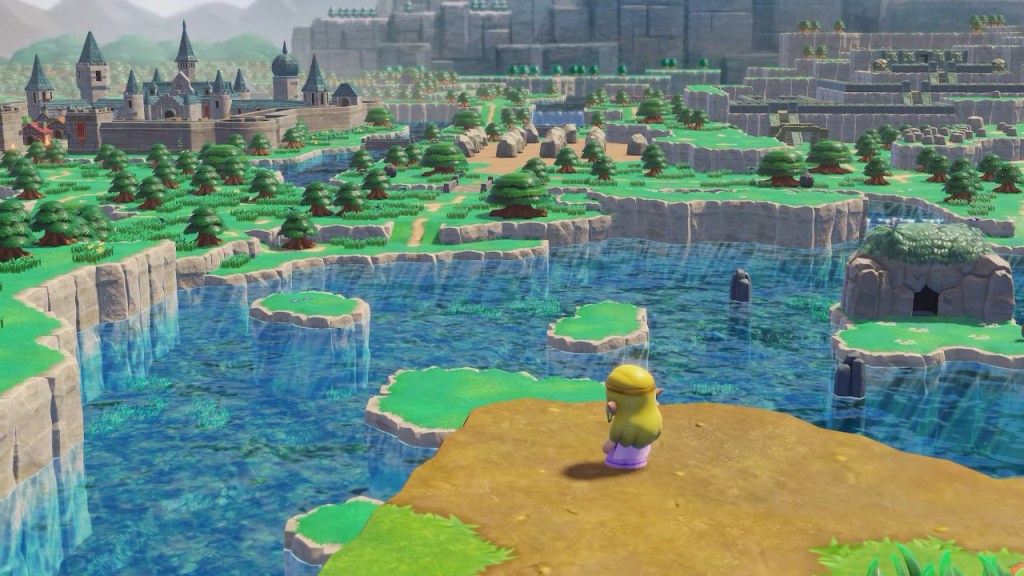
At first, I wasn’t sure how I felt about The Legend of Zelda: Echoes of Wisdom. I was concerned that, due to the nature of the game, my lack of creativity would be my undoing and diminish my enjoyment of the title. However, my preconception was wrong, I had overestimated what the developers expected from the player, and this led to an engaging experience that I did not want to put down.
As the protagonist for the first time, Zelda makes an impact on the player. Not only by playing differently with less combat ability than Link, but by showcasing her connections to the land of Hyrule as its Princess. It offers a fresh perspective while maintaining the tone of regular Zelda titles.
The narrative itself isn’t ground-breaking, nor is it an “epic” in the world of Zelda, but this game does shine when it comes to the smaller stories contained within its world. The land of Hyrule has been plagued with rifts, and swordsmen from across the land have tried to quell them, including Link. Having failed in this conquest, Link finds himself trapped, with Zelda being the final hope to recover the land of Hyrule. While the main plot feels simple, the side-stories told when approaching each rift are where the narrative shines. The individuals Zelda encounters throughout her journey have vibrant personalities, with their cultures deeply intertwined with the areas you explore and perhaps for the first time, it represents the princess helping her people directly and making a difference in their lives.
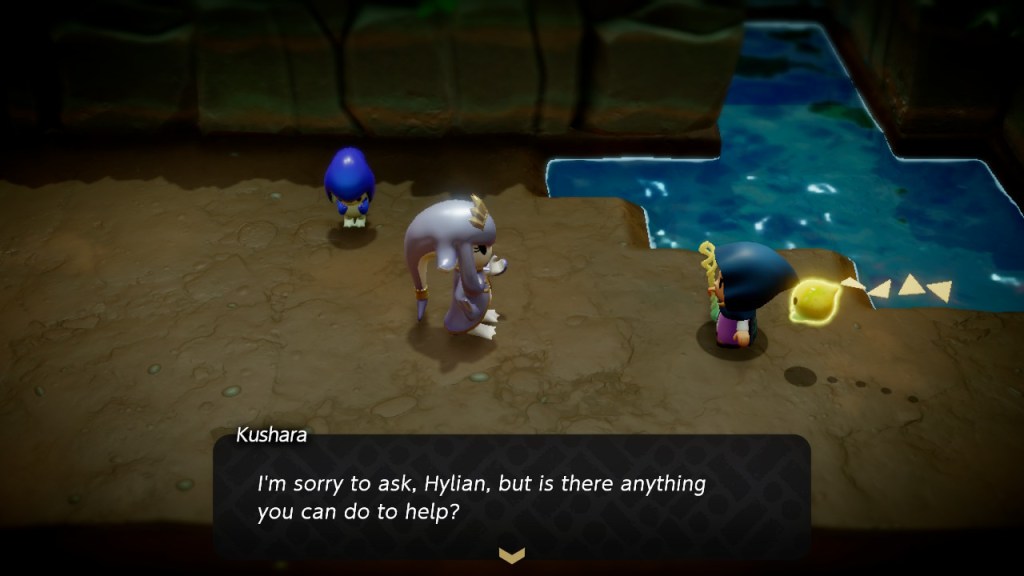
Gameplay-wise, Zelda is not a fighter. She’s a mage graced with the power of the unique Tri Staff, granted to her by the mysterious being Tri. The Tri Staff allows her to create “Echoes” of the beings and items in the world around her, utilising the attacking prowess of common enemies from the Zelda universe such as Moblins, Keese and many more, as well as objects to extend your ability to traverse the world of Hyrule and the dungeons within.
The use of ‘Echoes’ doesn’t require creativity from the player. They act more like puzzle pieces and it’s your job to see where they fit or perform the best job. Some platforms are hard-to-reach, or an obstacle could be in your way. It’s up to you to work out whether a stack of beds is sufficient, a flame to melt ice, or a Platboom that behaves like a Thwomp is the best way to navigate forward, and sometimes upward. You can also summon enemies that you have defeated to do your dirty work for you. They will attack other enemies and sometimes activate switches on your behalf.
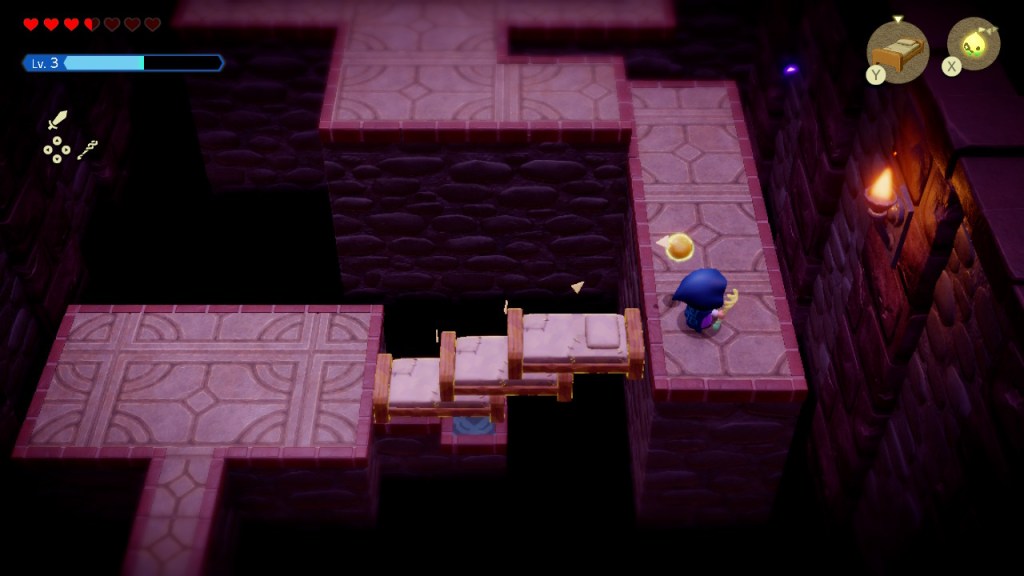
Overall, the “Echoes” mechanic is one of my favourites introduced throughout the whole Legend of Zelda series. It’s well balanced in that the amount of Echoes you can summon are based on your companion, Tri, and their level. As you progress through the game, Tri’s power increases, meaning some Echoes require less power to summon, or that Tri themselves has better potential and can summon more at once. There are some downsides to the Echoes themselves. The first, being the AI that drives the attacks. Sometimes it felt like my Moblins or Keese weren’t tracking down the enemies quick enough, or reacting as swiftly as I’d like. It lead to frustration at times while I constantly respawned them to try and take down the most basic of enemies. The other, being the UI. By the end of the game, if I held the joystick down, it would take in excess of 8 seconds to scroll from one end of my Echoes to another. Finding specific Echoes throughout the menu was never particularly easy, and I found that I favoured those toward either end of the menu, rather than those relegated to the middle section.
As well as Echoes, Zelda has the ability to turn into a “Swordfighter” form. She turns blue and resembles Link for a limited time. The gauge for Swordfighter form quickly dissipates when in use, and can be replenished when finding particles of energy. As the game wants the player to engage in the use of Echoes as much as possible, replenishing this gauge only really occurs when the developers intended the player to use Swordfighter form. It’s not something that can be easily abused, although the gauge can be increased throughout the game by obtaining Might Crystals. With these, you can upgrade the Swordfighter Form by increasing the level (meaning a higher gauge) or improving your weapons within this form to hit harder.
The Legend of Zelda: Echoes of Wisdom imposes a lot of freedom onto the player. It takes a lot of inspiration from the larger adventures found within Breath of the Wild and Tears of the Kingdom (BotW & TotK), whereby you can choose where you want to go. At first, the world opens up with two rifts to choose from. You can explore these in any order you like, before unlocking three further rifts and again adventuring in whichever way you feel you want to do. The narrative handles this better than BotW & TotK, in that it doesn’t rely on set pieces in flashbacks that need to be pieced together. The smaller parts of the narrative almost being self-contained to each rift compliment the gameplay and the player’s own choice massively in this regard.
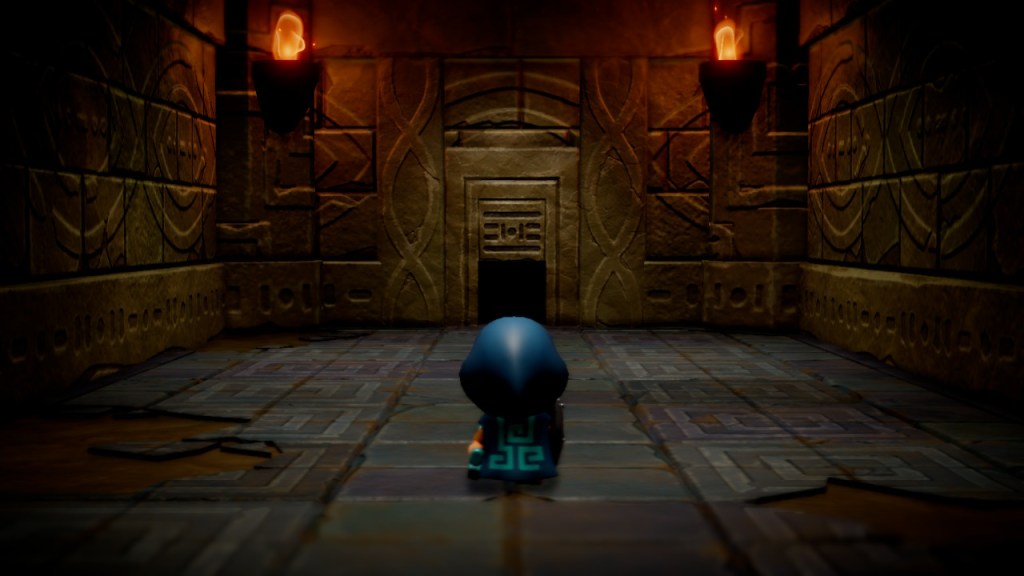
Dungeons return in Echoes of Wisdom, and have been a point of contention in recent titles for long-time Zelda fans. While Breath of the Wild and Tears of the Kingdom feature their own dungeons and many trials, they don’t live up to or emulate the feel of older, more structured dungeons from the legacy titles. Echoes of Wisdom feature a return to greatness in this regard. The player has the freedom to use whatever Echoes they have on hand, but often new Echoes are available in each dungeon as a hint on how to proceed, and are sometimes required to make progress. It’s an echo of old-school Zelda where you might find heavy boots or a grapple which is required to progress to the next room, and a very welcome return to a classic.
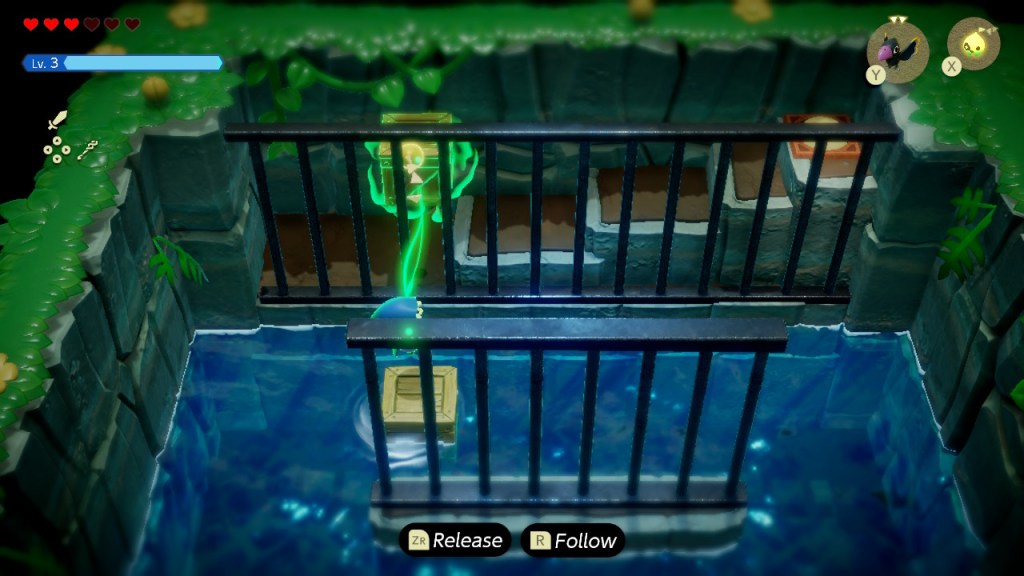
The music in The Legend of Zelda: Echoes of Wisdom invokes a sense of nostalgia, with familiar tunes and songs such as “Zelda’s Lullaby” making a return. Usually remixed or repurposed, the game’s soundtrack is teeming with soundbites and music that capture the essence of Hyrule, the dungeons, and the player’s attention.
Poorly designed UI and sometimes awkward AI within the Echoes themselves aside, I found exploring Hyrule itself a bit of a weak point. Whenever I had to make my way to another part of the Kingdom, I found myself using the fast travel points dotted around Hyrule, in a desperate attempt to just get my fix from the brainteasers that awaited in the next dungeon. While exploration of Hyrule itself didn’t spark the same sense of curiosity I’ve felt in past Zelda games, it’s worth noting that others may appreciate the game’s lean into an open-world. The fast-travel system allows for a more focused experience, especially for players who prefer the challenge and reward of dungeon. The game’s performance also saw larger dips as I explored Hyrule, making it stutter and slow at times. I consider the Dungeons the best part of the game, both gameplay wise and performance, although they do also see the odd stutter and jump when things become a bit taxing for the aging Nintendo Switch hardware.
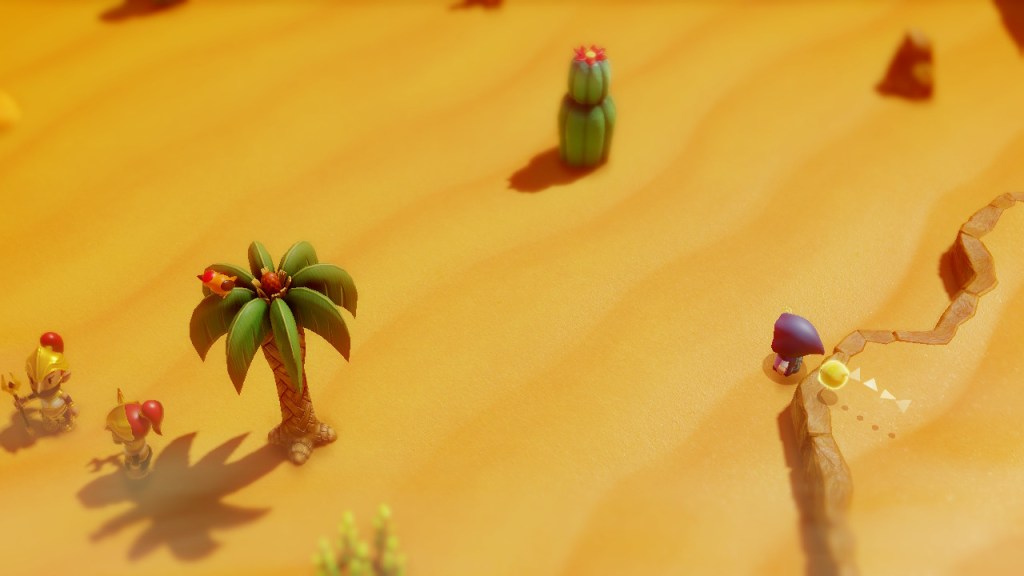
Minor complaints aside, The Legend of Zelda: Echoes of Wisdom is one of the best games I have played on the Nintendo Switch. Performance issues plagued the game more than I’d have liked, but that didn’t hamper my enjoyment. I simply did not stop having fun. It’s one of the best paced, mind-teasing and entertaining titles I’ve had the pleasure of experiencing. Clocking in at around 20 hours to complete, I found the game just the perfect length to keep my attention but not drag on for too long. The game will be longer for those who enjoy the exploration of Hyrule and take their time with more of the side quests, but there’s no right of wrong way you play this game. Zelda and Nintendo fans in general are bound to have a great time.
9 out of 10
Review code provided by Publisher | Tested on Nintendo Switch

 Everyone's Arcade
Leave a comment