
Developer: SEGA | Publisher: SEGA
Super Monkey Ball is perhaps one of Sega’s more niche titles, being overshadowed by their over more popular series like Sonic the Hedgehog or Persona. But that’s not to say its not deserving of the spotlight. Super Monkey Ball tempts the player to make use of speed, momentum and precision as they carefully yet ferociously make their way through each of the playable stages. Super Monkey Ball: Banana Rumble is the latest entry to the series, but how does it shape up?
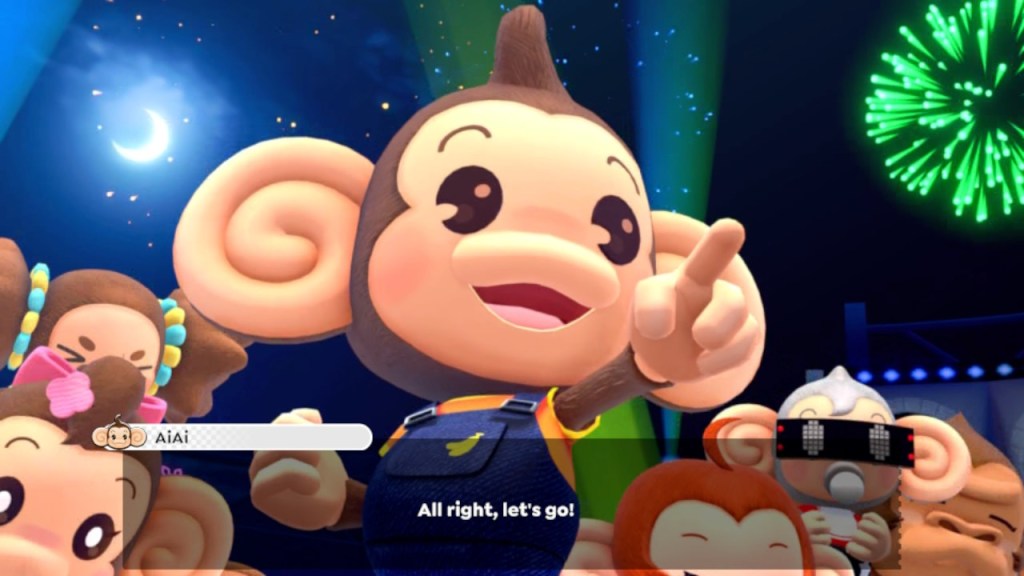
If you’re arriving at any Super Monkey Ball game for the narrative, just keep driving past. The series is not the destination for hard-hitting lore or deep story-telling.
Super Monkey Ball Banana Rumble shares a basic narrative of AiAi and friends meet a girl named Palette, who’s in search of her missing Father. The only clue? He’s seeking out “The Legendary Banana”. The key to discovering the Banana is to locate and obtain all seven mysterious relics dotted across the world, and so the journey begins and the narrative serves as a plot device to move you from location to location in the Adventure mode.
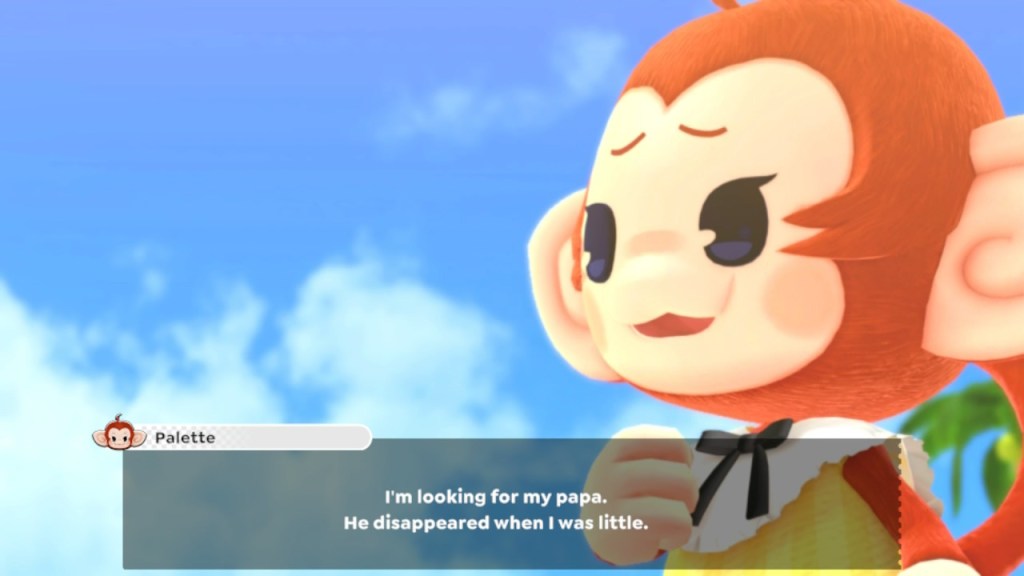
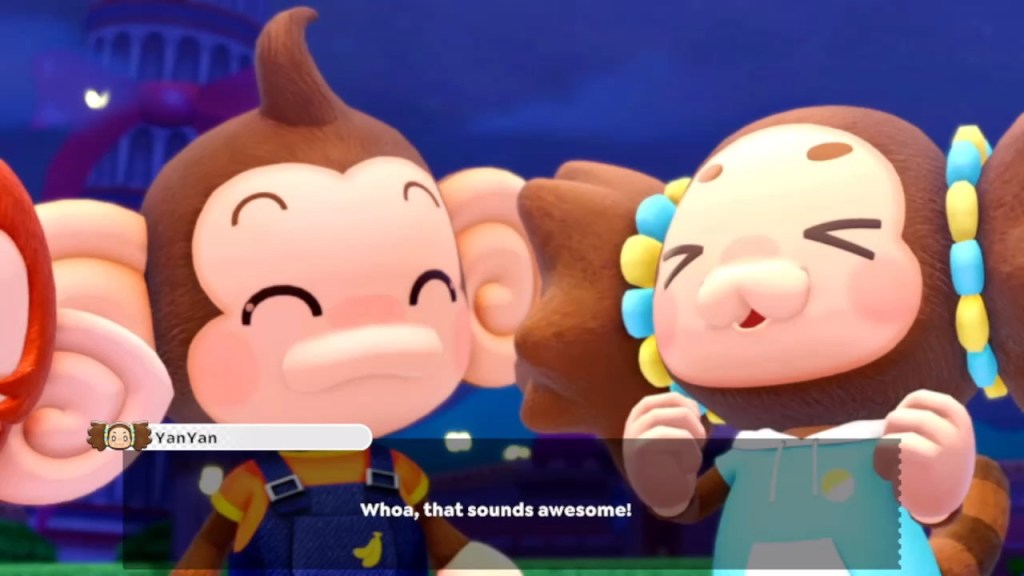
There’s not an awful lot to share about my thoughts on the story mode. There are fully developed cutscenes throughout the game to shape the story. They’re cute and they serve the purpose to make the Adventure mode a little more entertaining, with the odd twist and turn to keep your attention, and sneaky references to other Sega titles which fans will no doubt enjoy. But don’t come expecting anything ground-breaking. Monkey Ball is all about the gameplay.
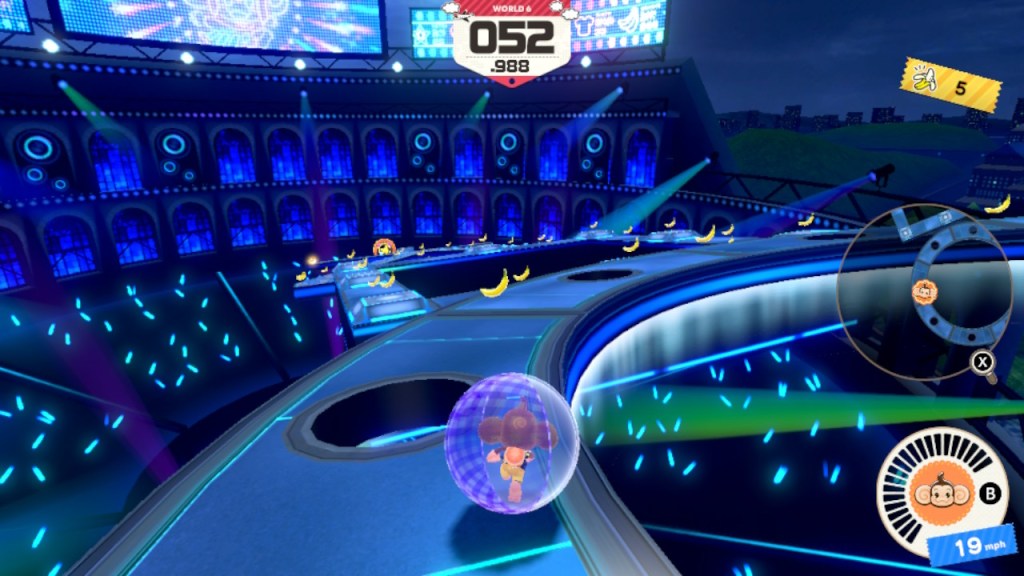
Super Monkey Ball Banana Rumble thrives on its unique gameplay. It serves up a traditional Monkey Ball experience of tilting the stage to manoeuvre, with a new “Spin Dash” technique introduced to add a bit of spice to this delicious serving of fun. The “Spin Dash” allows you to charge up some momentum and speed as you traverse each stage. Sometimes its risky, other times it might save your bacon, but it’s a great technique to test the limits of your skills in Monkey Ball. Sometimes it just gives you that edge you need to get to the next platform, other times you’ll regret ever holding B to charge as your poor Monkey meets its fate as it tumbles off the stage.
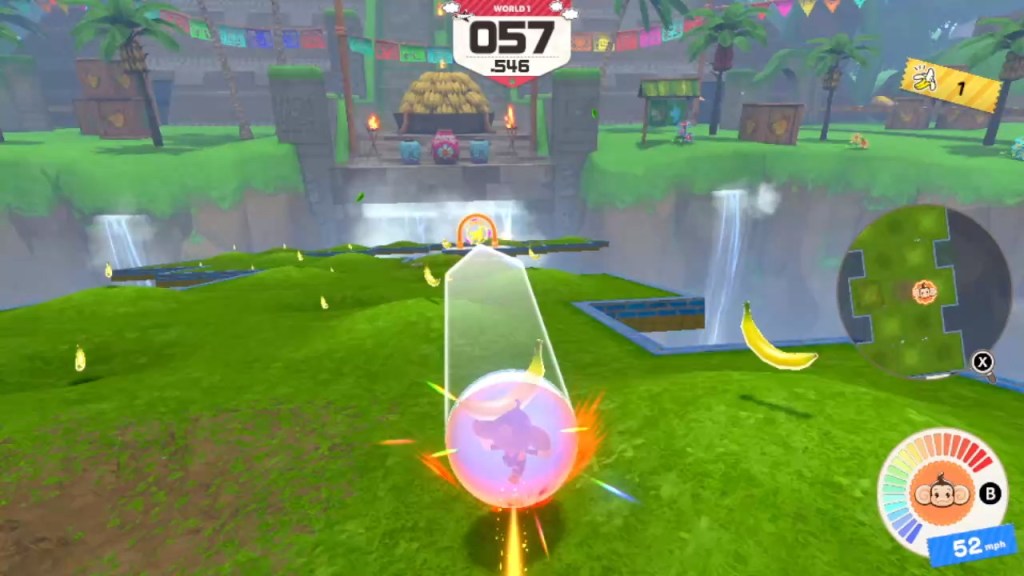
The basic Adventure mode grants you access initially to ten worlds, each with ten stages, with the simple goal of reaching the end. This gets your accustomed to the mechanics of the title and begins to make you feel comfortable before settling in to the challenges that lay ahead. Each stage has a set of challenges aside from the basic objective, such as time trials, finding the golden banana or obtaining a minimum amount of bananas.
If you play Monkey Ball just to reach the end of all of the stages, you’ll have a great time, but you probably won’t get the most out of this experience. In my opinion, Super Monkey Ball Banana Rumble is at its best when you are exploiting the mechanics of the game to go as fast as possible and pull off some crazy stunts to get to the end. After beating the initial campaign, you’ll be invited to play through the “EX Stages”, which invite you to a much more challenging experience.
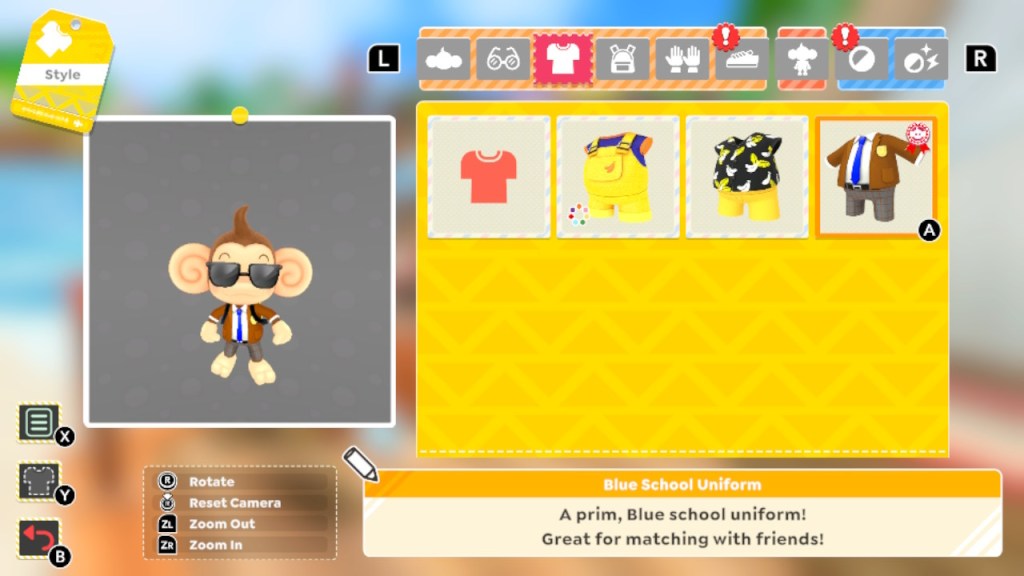
By beating the additional missions, you’re rewarded with points to customise the crew. You can customise your monkey’s ball, the clothes they wear and the special effects of the ball when charging the Spin Dash. You can then show off your swag online against others, or with your friends locally. The more you progress in the game, the better rewards that are available and the more personalised your experience becomes.
Super Monkey Ball Banana Rumble can get quite difficult as you approach the later stages of Adventure mode, and even in the earlier stages if you’re not used to this style of gameplay. Fortunately, there are a few “Assist Features” in the game for those wanting to master the art of Monkey Ball without the intimidation of failing over, and over, and over again. This mode allows the player to rewind, have a “Ghost Guide” to show you the best route, a “Route Guide” to point you in the right direction, or even a checkpoint in some stages. This does limit the rewards available to the player, but makes the game incredibly accessible for those learning the ropes and to save you from going bananas.
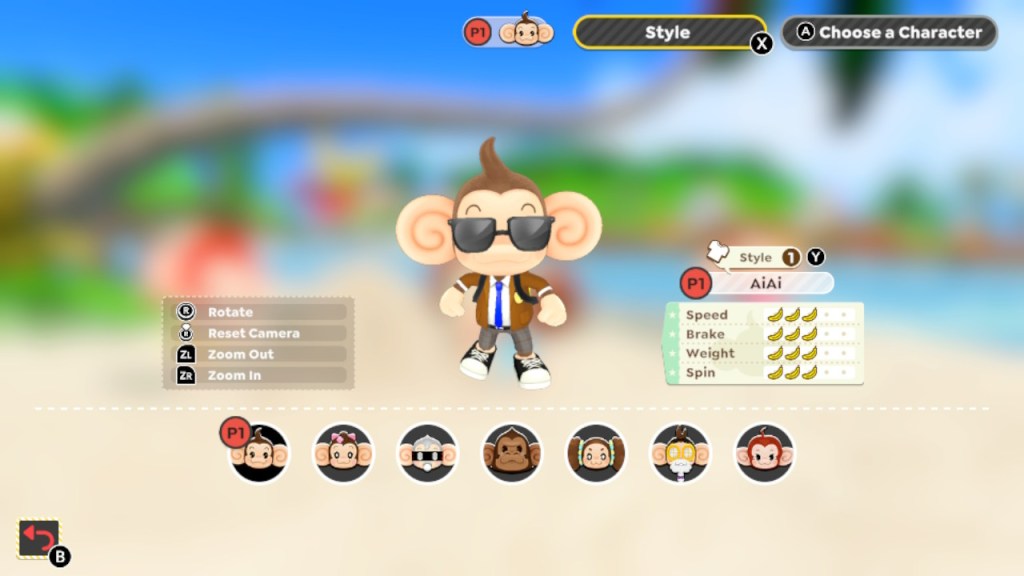
Each monkey in the game has its own set of stats. For example, AiAi is the most balanced and the one I’d recommend to newcomers of the series, like myself. Others have higher speed stats, higher brakes or heavier weight, but that comes at the cost of other stats. It’s worth experimenting to see what suits your playstyle more, and it’s especially worth trying out the rest of the crew when trying to pull off the crazy missions available.
My one and only gripe with the gameplay comes in part with the missions themselves. There’s a set screen on the menu to check which missions remain outstanding and what points you earn from completing them. But there appears to be no view of this on the level select itself. It would’ve made for a better user experience if you could quickly check the outstanding missions on each level and jump in and out as you pleased to try and quickly tick off this list.
I came into the Multiplayer of Super Monkey Ball Banana Rumble not expecting much at all. Having got the game on release day, I was already subject to court of public opinion and seeing how others had reacted to this mode. Which surprised me even more when I found myself having a genuinely good time playing this.
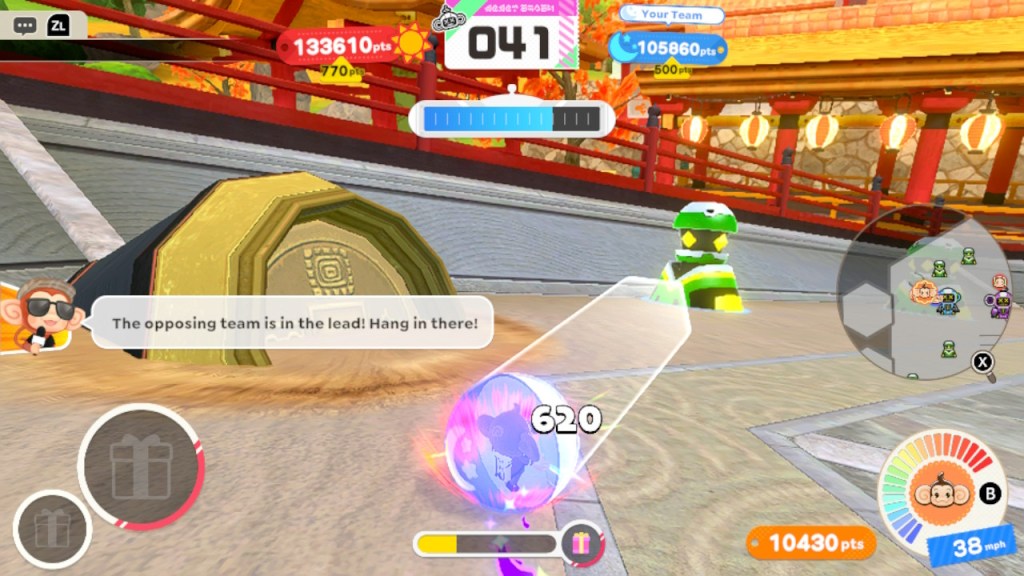
For the full details of everything you can do in Super Monkey Ball Banana Rumble’s multiplayer, you can check out our page here. In my experience, I didn’t find a mode I disliked. You can play with up to 16 people online, or if you fancy an offline experience you can just play against bots. The chaotic fun of the multiplayer reminded me of the feeling I get when playing something like Mario Kart. I was full of joy, having fun with other competitors but I never felt too far left behind or frustrated too much when the result didn’t go my way.
It’s not all sunshine and roses with the multiplayer, however. There appears to be no way to select any mode in particular, so you are thrown into a lobby online and are forced to just go with the flow. You could be waiting a while before returning to your favourite mode. The game never appears to keep you in the same lobby match-after-match either. You are thrown back into a practice arena while awaiting a new match up every time, and it’s not quick. For a title only a week old, waiting at least a minute or more before I could find a lobby felt a bit deflating. What’s this going to be like in weeks, or months to come?
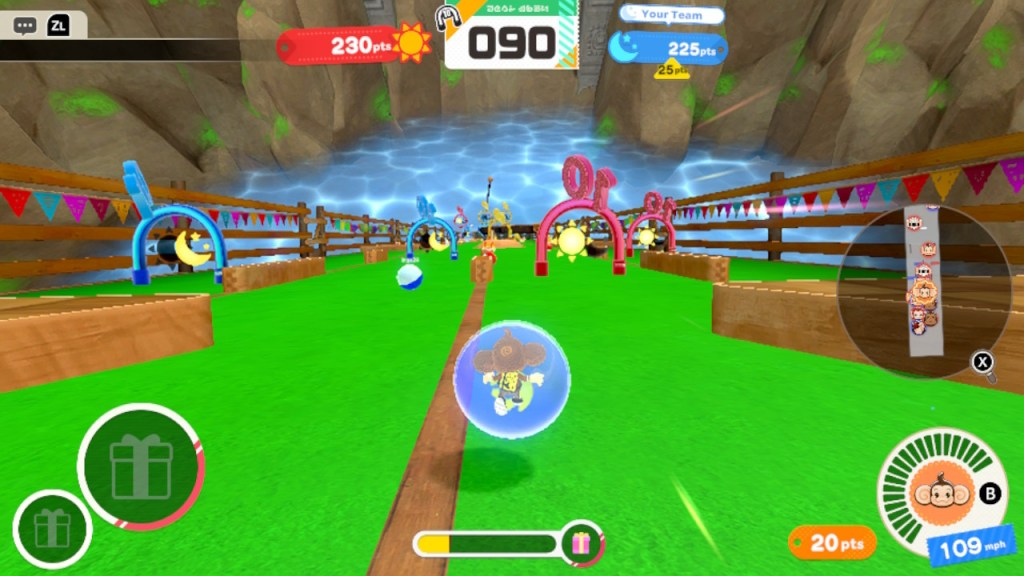
Grievances aside, there are incentives and rewards to playing online. A “Battle Pass” style reward system is in play. This is completely free, and there are no gacha elements to any of the online rewards. The more you play online, the more rewards you get to kit out your monkeys. The game is currently in Season 1, and it’s unclear if these rewards are exclusive to this season, or whether they’ll make returns later on. But it’s good to have something to work toward in the multiplayer scene. Overall it’s an experience I can see myself getting into, possibly more than the main title. But that’s only if the lobbies continue to fill up.
Super Monkey Ball Banana Rumble employs a cartoon-style, with vibrant colours, cool characters and incredible scenery. Currently a system exclusive on the Nintendo Switch, it does struggle with certain levels when it comes to performance. Multiplayer especially has what might be a bit of resolution scaling, but definite frame-drops when compared to the rest of the title.
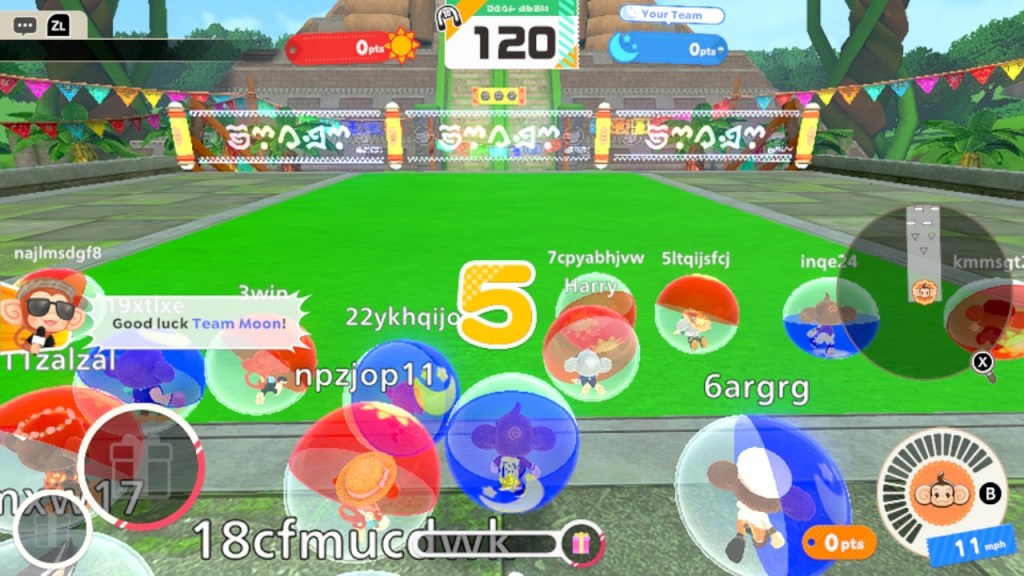
It’s not the most stable game, though the single player mode mostly delivers when it comes to performance, it could use some tweaks, or perhaps more powerful software to service it. The game is by no means rendered unplayable, but it can be a touch distracting. The soundtrack isn’t necessarily memorable or something I’ll be humming along to, but it certainly fits the theme and incites excitement and fun in the stages.
If you’re new to the series, the controls might be slightly difficult at first. In Monkey Ball, you don’t control the monkey, you tilt the stage as the ball gains momentum. The skill comes from learning how to manipulate this to your advantage, and while it may feel jarring at first, you soon adapt and learn how the unique controls make this series as good as it is.
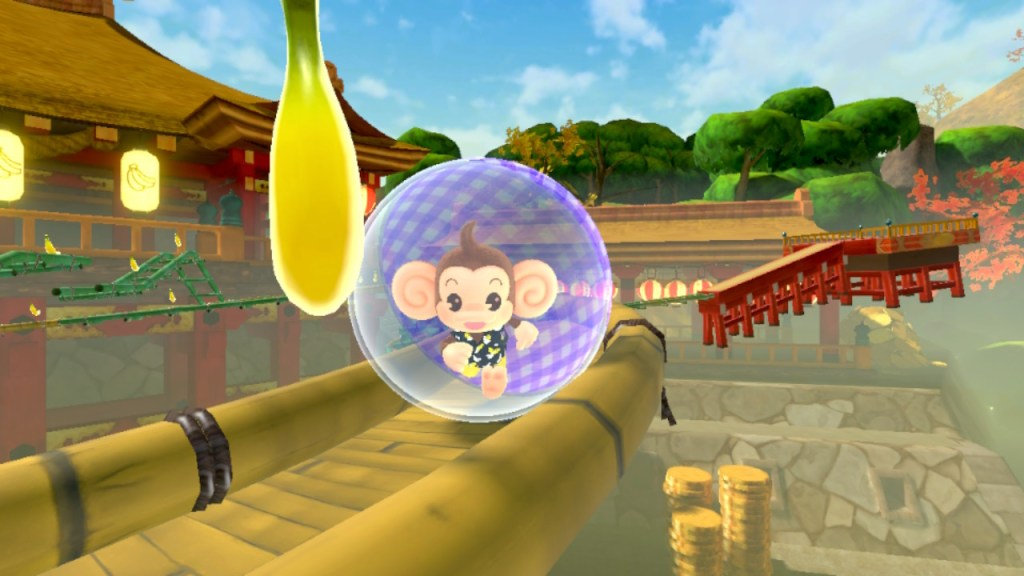
The spin-dash is easy to pull off, by holding “B” and charging your shot. The camera more or less operates itself, but you can utilise the right stick to adjust this to your needs, or hold the “R” shoulder button to keep the camera static in one position behind the monkey. It’s not a feature I felt I needed to use often, but some stages really benefited from the sturdiness of a static view.
Super Monkey Ball Banana Rumble is the perfect game to play if you only have a few minutes to sit down, or if you have an hour or two in the evening. In the smaller periods, you might not even beat a stage, but you’ll feel satisfied for giving it a good go.
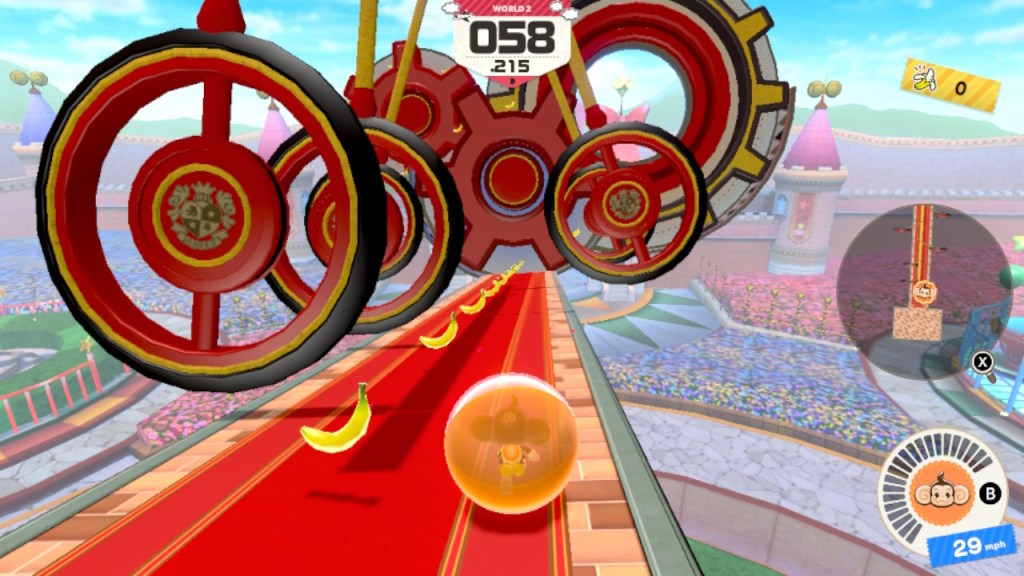
As a newcomer to the Super Monkey Ball series, I didn’t really know what to expect. I thought that I would have a little bit of fun with it and put the game down once I had finished it. Super Monkey Ball Banana Rumble has now become a part of my routine life. I can’t help but pick it up and try and complete another challenge or beat my previous time.
When I first started playing I didn’t understand how to manipulate the mechanics to my advantage and I received the “Fall Out” message a lot. Once I got to the third world, the philosophy behind Super Monkey Ball made sense to me. I began to have an epiphany about how to play this game, what Sega wanted me to do, and how to extract the fun out of this title. I loved it. I wish I had discovered this series earlier in my gaming life.
8 out of 10
Review code provided by Publisher | Tested on Nintendo Switch

 Everyone's Arcade
Leave a comment